 繁体中文
 Italian
 Spanish
 Thai
 Turkish
 Japanese
 Portuguese
 Russian
 French
 German
 Polish
 Arabic

Oct 15,2026
Top 10 Best Premium Accessory Suppliers for Online Marketplaces in 2026
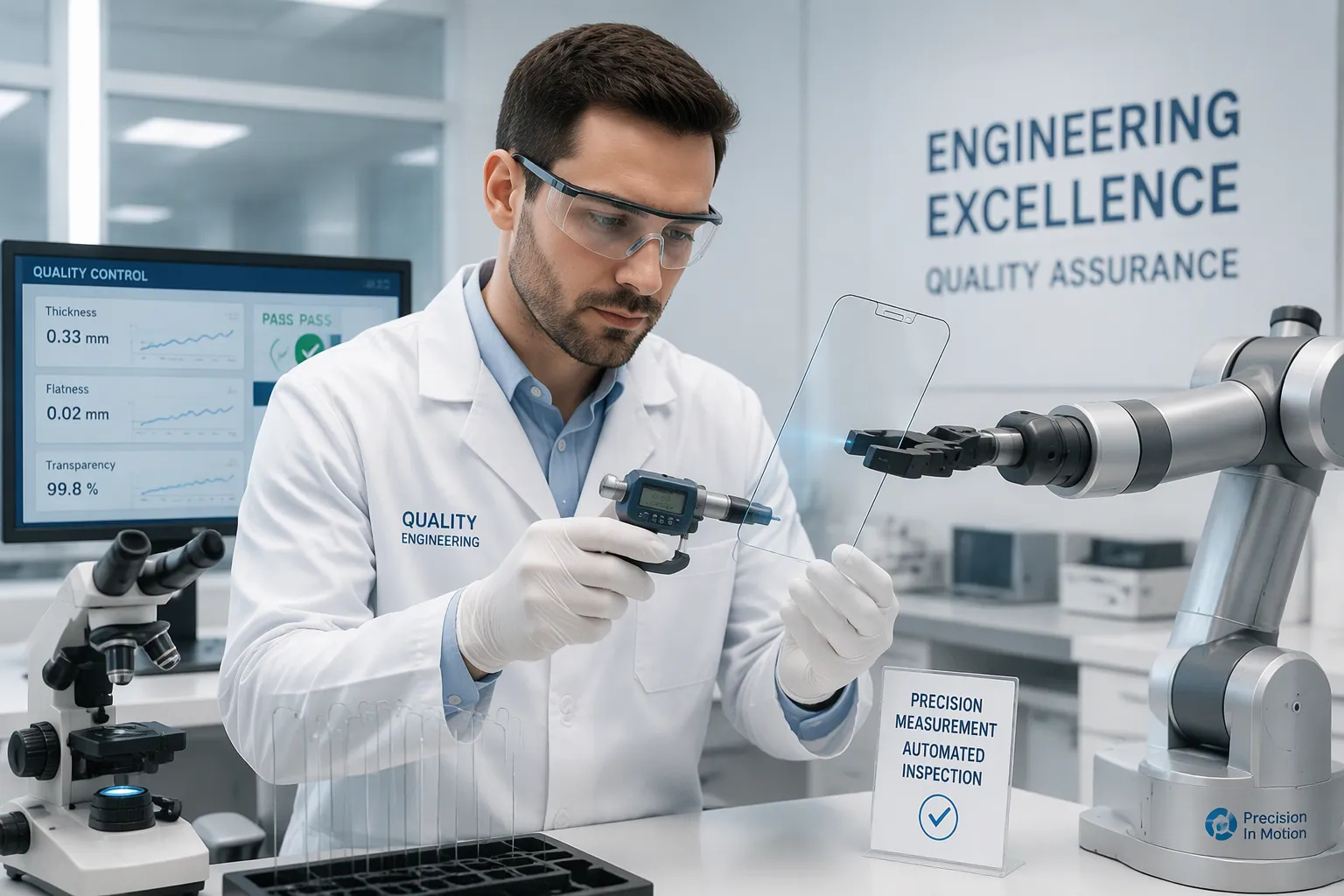
Choosing a professional screen protector company comes down to six areas: engineering expertise, manufacturing precision, material science, testing and validation, customization and application fit, and regulatory compliance and cost. Marketing claims are easy to make. Real engineering depth is harder to prove. This guide gives you a practical, evidence-based screening framework. You will learn what documents to request, which questions to ask, and how to separate genuine capability from surface-level qualifications. Apply the criteria in order, and you can evaluate any screen protection supplier with confidence before you commit to a partnership.
Look at the supplier's engineering team, patents, and design review records to make sure they have real expertise.
Ask for cleanroom logs and cutting tolerance data to make sure the manufacturing is precise.
Ask for material datasheets and coating test reports to check product quality.
Ask for test plans and certificates that show the product works well and meets the rules.
Compare the full costs, and begin with a small test order to check the supplier.
Engineering depth is what separates a real partner from a trading company with a catalog. You can check this depth in three ways: people, patents, and process.
Ask for an organizational chart that names the research and development team. A serious supplier has dedicated engineers, not just one part-time designer. Ask for the headcount, the fields they work in, and how long they have stayed. You want materials engineers, mechanical designers, and process engineers on staff.
Next, look at the patent portfolio. Patents show that a company puts money into original work. X·ONE, founded in 2009, holds more than 180 patents and awards, which shows the scale a mature player can reach. Other established manufacturers share similar records. Treat the portfolio as proof, not decoration. Check that the patents cover structures, coatings, and application methods that matter for screen protection.
Finally, study the design-review process. A disciplined supplier runs formal reviews at each stage of the oem development process. Ask for sample review records. Look for written design inputs, risk analysis, and sign-off gates. This is where careful engineering becomes visible. A supplier that cannot show review documents probably skips them.
Verbal claims about advanced technology mean little without hardware. Ask for a list of lab equipment and test benches. Look for drop-test rigs, abrasion testers, optical measurement tools, and environmental chambers. Ask for photos of the floor and the calibration records for key instruments.
Certifications matter too. Ask for current certificates for quality management systems and product safety testing. Make sure the certificate scope covers screen protection products and the manufacturing site you will use. Check each certificate with the issuing body. A PDF alone proves nothing.
Documentation is what separates suppliers here. A technology-driven oem tempered glass screen protector program needs traceable test data, not a sales deck. Ask for raw test reports with dates, sample sizes, and pass criteria. Compare the reports against the claims in the proposal.
Supplier types fit different needs. Large established players offer broad certification coverage and deep labs. Specialized factories often give faster access to engineers and more flexible test scheduling. Smaller workshops may suit low-volume work but rarely support full verification. Match the supplier to your program's risk level.
Hold every candidate to the same standard. Ask for documents, review them against the claims, and visit the site when volume justifies it. Proven capability in research and development and manufacturing is the base for every later decision.
Precision begins with the setting. Dust and tiny particles in the air cause bubbles, specks, and weak stickiness in tempered glass screen protectors. Ask the supplier to name the cleanroom class for each production area and to show the particle monitoring logs. A serious factory counts particles on a set schedule and keeps records you can review.
Automation shows you how much the process relies on human hands. Ask for a walkthrough video or an on-site audit of the lamination, coating, and inspection lines. Look for automated optical inspection stations that catch defects before packing. Ask how the line deals with a rejected unit. A clear answer shows a controlled process. A vague answer points to manual sorting and hidden rework.
Cutting accuracy decides whether a protector fits the device edge or lifts at the corner. Ask what tolerance the factory holds on length, width, and corner radius, and ask about the measurement method behind it. Request capability data from a production run, not a single perfect sample. This data supports steady quality control across large orders.
Check the cutting equipment itself. CNC or laser cutting with calibrated tooling holds tighter edges than hand-guided methods. Ask for calibration records and how often they recheck. Then confirm how the factory ties cutting data to each device model. A careful manufacturing team keeps a model library and updates it when new devices come out. Request a sample cut from the current library and measure it yourself. This step turns advanced technology claims into something you can check. Strong quality control at the cutting stage protects your brand once units reach customers.
Good materials start at the source. Ask each company which glass suppliers it uses and how long those ties have lasted. A steady partnership usually means even sheet quality and dependable delivery times. Ask for the material datasheets for every layer, including the glass, the adhesive, and the coating stack. Check that the datasheets list the supplier and the grade. A generic spec sheet with no source tells you very little.
Formulation data counts as much as the base material. Ask for the makeup of the adhesive and the optical layers. Suppliers of advanced optical materials often protect these details, so ask for a summary under a confidentiality agreement. Compare the data against the claims in the proposal. This step separates high-quality screen protectors from products that only carry fancy feature names.
Feature names are marketing. Specs you can verify are engineering. Ask for test data behind every coating claim, and confirm the test method and sample size. Industry examples show the range of options. LOCA glass uses a liquid adhesive layer for optical clarity. Self-healing films bounce back from light scratches. Hybrid polymer systems deliver advanced impact protection technology, and X·ONE's DNA Guard 6m drop protection shows this category. Surface treatments such as EnduraClear™ Anti-Yellow Tech, AR Pro Coating, and Nano Coating address yellowing, reflection, and fingerprint resistance.
Each option fits a different use case. Premium tempered glass screen protectors suit buyers who want a familiar feel and strong scratch resistance. Hybrid polymer builds serve users who drop their phones a lot. Tempered glass construction with reinforced layers supports maximum strength and durability for flagship devices. Whatever you choose, tie the claim to a test report. A high-quality screen protector earns that label through documented performance, not a slogan. Source the highest-quality materials, verify them, and you deliver ultimate device protection your customers can trust. Strong screen protection begins with evidence, and evidence begins with the material file.
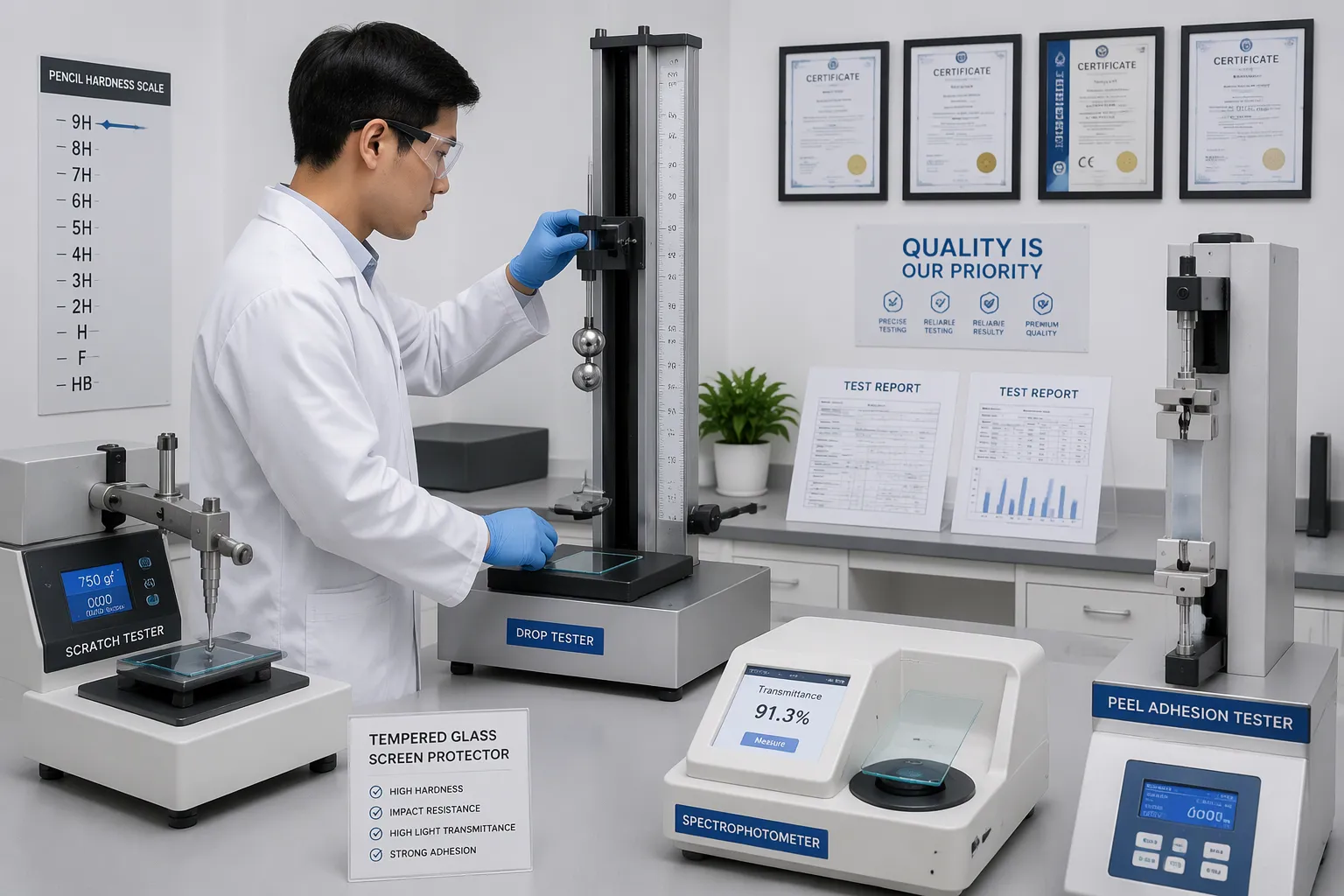
Test data is the only real proof that a product does what it promises. Ask every candidate for its test protocols before you talk about price. A supplier with real skills will share this information right away.
Start with the main performance tests. Ask how the factory measures drop resistance, scratch hardness, impact absorption, and light transmission. Request the test method, the sample size, and the pass criteria for each one. A report with no stated method tells you nothing.
Test Area | What to Request |
|---|---|
Drop resistance | Drop height, surface type, number of units tested |
Scratch resistance | Hardness scale used, load applied, pass criteria |
Optical clarity | Transmission and haze readings, instrument named |
Adhesion | Peel force method, cure conditions, failure mode |
Check the optical performance targets against your own product spec. A protector that makes the display look dull will fail in the market, no matter how strong it is. Ask for haze and transmission readings from a production batch, not a hand-picked sample.
Then look at the process behind the numbers. Strong suppliers run a lot of testing and fine-tuning on each production run. They adjust coatings and lamination settings when the data starts to drift. Ask how the factory handles a failed lot. A written corrective action shows a quality system that works.
Field data adds another layer. Ask for warranty return rates and customer complaint categories. These numbers show how tempered glass screen protectors act in real hands. Put lab results together with field data, and you get a full picture of product reliability.
Standards give you a shared language for quality. Ask which standards the factory tests against and request the current certificates. X·ONE products, for example, carry Apple MFi approval, Qi wireless certification, and testing by SGS and TÜV. Other established suppliers hold similar credentials. Confirm each certificate with the issuing body and check that the scope covers the exact product you plan to buy.
Compliance also covers the claims on your packaging. If your label promises exceptional durability, the test file must back up that claim. Regulators in many markets require proof for performance statements. Keep the evidence on file before you print a single box.
Rigorous testing protects your brand in another way. It catches design flaws before mass production. Ask for the validation schedule and confirm that every model passes before it ships. A supplier that treats testing as a final checkbox will eventually send you defective stock.
Pair compliance records with sample evaluation. Order units from a current production run and test them yourself. Measure fit, clarity, and scratch resistance against the supplier's own reported figures. This step confirms that the advanced technology in the proposal matches the product in the box. Apply the same discipline to every candidate, and you secure screen protection your customers can trust. Verified performance is the foundation of ultimate device protection, and it turns a high-quality screen protector from a claim into a documented fact.
Custom solutions start with the device list and how you plan to use it. Ask the supplier which models it covers and how quickly it adds new releases. A partner with a large model library helps your launch schedule. A small library makes you wait.
Then look closely at private-label screen protector customization options. Confirm where your logo goes, plus the retail packaging and insert design. Ask for physical proofs before mass production. Also check cut-on-demand and in-store application systems. ProtectionPro and Belkin SCREENFORCE PRO show how these systems pair a cutting machine with trained staff. Each option fits a different sales channel. Pre-cut stock works well for online retail. Cut-on-demand works for stores that carry many models in little space. Match the method to your sales channel, and confirm the installation steps your staff or customers will follow.
Special features need special production lines. A red light screen protector factory must control the optical layer, not just the glass. Ask for transmission data on the red-light filter and the test method behind it. Blue-light filtration features follow the same rule. Gadget Guard Glass Pro shows this category. Request the spectral readings and confirm the claimed filtration range.
Check model coverage and installation methods before you commit. Ask how the factory handles curved edges and camera cutouts on each model. Request samples and install them yourself. Confirm that the adhesive cures cleanly and the edges stay flat. A capable red light screen protector factory will document custom product specifications for every order. Clear custom product specifications protect you at inspection and at retail. Strong screen protection depends on this fit, and verified screen protection keeps returns low.
Compliance is not just paperwork you deal with at the end. It decides which markets you can enter and which claims you can print. Ask each candidate for current certificates and make sure the scope covers the exact product and factory site. X·ONE products carry Apple MFi approval, Qi wireless certification, and testing by SGS and TÜV, which shows the credentials a mature supplier can hold. Other established players hold similar records. Check each certificate with the issuing body before you sign.
Total cost of ownership is more than the unit price. Add in warranty returns, rework, freight, and the staff time you spend chasing defects. A cheap quote from a weak screen protector wholesale supplier often costs more once returns pile up. Ask for warranty return rates and complaint categories. These numbers show how screen protection performs in real hands. A supplier with strong manufacturing controls usually delivers a lower total cost over a full program.
Put every quote on the same basis before you compare. Ask each supplier to price the same model, the same quantity, and the same packaging. Request a line-item breakdown: material, coating, cutting, inspection, packing, and freight. A single lump sum hides where the cost sits.
Then compare what each price includes. Check whether the quote covers tooling, samples, and certification support. Ask how the supplier handles a failed lot and who pays for replacement. A quote with clear terms protects you later. A vague quote invites disputes.
Treat the lowest price as a question, not an answer. Ask what the supplier left out.
Run a small trial order from your top two candidates. Test fit, clarity, and scratch resistance against their reported figures. Pair the trial results with the quote breakdown, and you can choose a partner on verified capability. That approach builds a long-term relationship on evidence, not marketing claims, and keeps your screen protection program on solid ground.
Use the six areas as a screening framework you can repeat. Start with proof of engineering and manufacturing. Then move to materials, testing, customization, and finally compliance and cost. Ask for the evidence in that order. Request documents and samples at every stage. This order keeps you safe from a smooth sales pitch. A weak process cannot pass it.
A capable professional screen protector company will welcome this close look. Let verified capability, not marketing talk, decide your choice. Strong screen protection programs grow from that discipline. Treat each audit as the first step of a long partnership. Reliable screen protection then becomes a shared result you can measure, defend, and repeat.
Ask for documents, not just verbal promises. Request the R&D org chart, patent list, and design-review records. Check certificates with the issuing body. A professional screen protector company will share this evidence quickly. A trading company will stall or send generic brochures.
Measure fit, edge lift, clarity, and scratch resistance yourself. Compare your readings against the supplier's reported figures. Install units on real devices and watch the edges for a few days. This step confirms that screen protection performs as documented, not just as advertised.
Ask for the model library size and the typical lead time for new device releases. Confirm coverage for every SKU you plan to sell. A partner with a broad, current library keeps your launch on schedule. Verify the list in writing before you commit.
Price the same model, quantity, and packaging across candidates. Request a line-item breakdown covering material, coating, cutting, inspection, packing, and freight. Confirm whether tooling, samples, and certification support are included. Treat the lowest price as a question, not an answer.
Start with a small trial order from your top two candidates. Test the units against their reported figures. Review the results together and agree on corrective actions. A professional screen protector company welcomes this scrutiny. Repeat the audit each year to keep screen protection quality steady.
Join X.ONE to access our best-selling original product,and leverage our end to end technical and marketing support to unlock new growth opportunities for your business.
 Material Support
 Training Support
 Marketing Support
 Exhibition Support
 Technical Support
 After Sales Support