 繁体中文
 Italian
 Spanish
 Thai
 Turkish
 Japanese
 Portuguese
 Russian
 French
 German
 Polish
 Arabic
Oct 29,2026
How to Find Premium Suppliers for Customized Mobile Protection Solutions
You can judge any candidate on four pillars: technical performance, product fit, regulatory compliance, and cost-effectiveness. Use the same method everywhere. Sourcing now covers many regions, and Asia-Pacific holds about 47.5% of the mobile accessories market, according to Scoop Market. A steady scorecard matters more than geography.
Mobile accessory companies with a strong global presence make evaluation easier. Look for an international customer base, solid distribution networks, and a global footprint that supports your region. The consumer electronics industry rewards partners with real global reach. Ask how each supplier runs distribution across the global market. A broad international presence and visible market presence signal dependable mobile accessories supply. These four pillars keep every comparison fair.
Judge every supplier on four pillars: technical performance, product fit, regulatory compliance, and cost-effectiveness.
Ask for actual defect data and quality certificates. Do not depend on sales claims by themselves.
Make a complete landed cost model. Add shipping, duties, insurance, and packaging to your total cost.
Try out samples and place a small test order before you sign a big contract.
See how quickly a supplier replies to your questions. Good communication is a sign of a dependable partner.
Begin with a factory visit or a video audit of the production line. Ask how many units the line makes per shift and how the plant handles peak orders. A factory-direct operation may claim a 0.3% defect rate and 25–30 day delivery. Treat these as benchmarks, not universal standards. Compare each candidate against them.
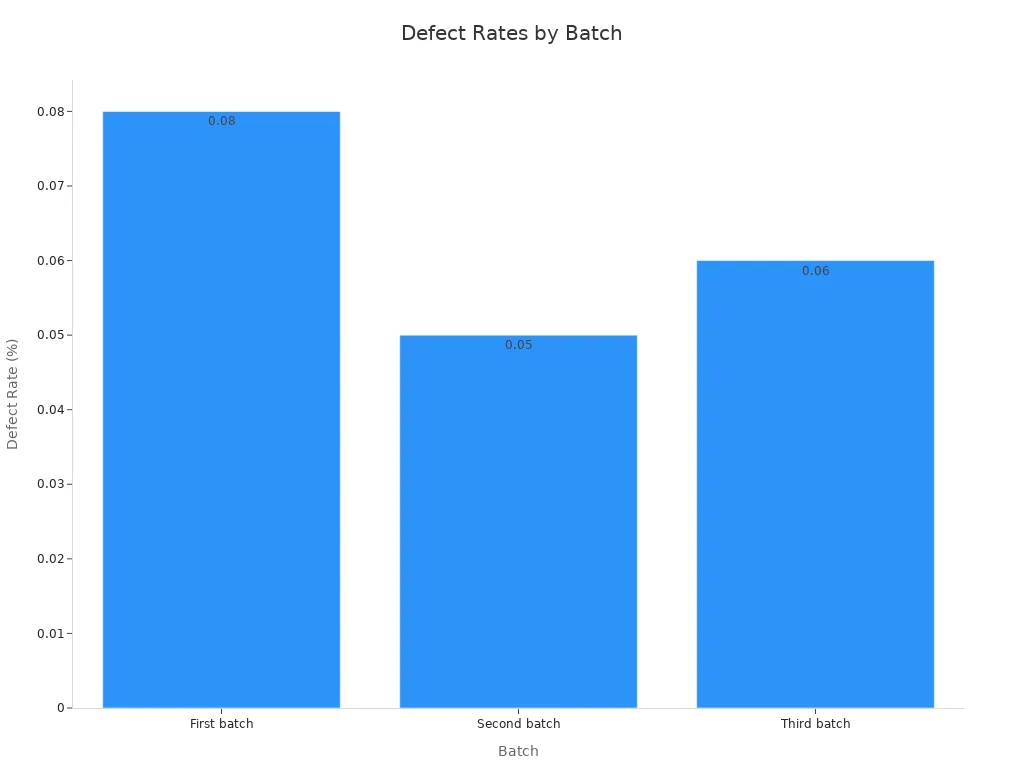
Defect data tells you more than a sales pitch. Aqiservice.com reports defect rates of 0.08%, 0.05%, and 0.06% across three inspected batches of mobile accessories. That range shows what tight process control looks like in practice.
A LinkedIn post from Alex Fedotoff notes that an 8–10% defect rate is normal in the gadget category. Most operators never work out what that costs them. Use both figures to shape your questions. Ask each supplier for its own batch data and its plan for cutting defects. Review the manufacturing facilities in person when you can. Check how the plant schedules manufacturing runs and how it tracks output.
Strong control systems depend on documented process control. ISO 9001 certifies a business for its quality management system, and third-party firms audit adherence to ISO principles. Certification signals an international mark of quality. Request the audit report, not just the certificate.
Certification marks differ by market. Sigma Vizin lists BIS, CE, RoHS, and FCC as common requirements for the electronic mobile accessories category. Apple MFi, Qi wireless, SGS, and TÜV testing show what a mature quality system looks like. X·ONE holds these certifications, as one example among many. Ask every candidate for its certificate list and the labs behind each mark. A supplier with a global presence should show certificates for each region it serves. Strong product quality also depends on incoming material checks and final inspection. Tie those steps to the manufacturing process, not to a brochure. Confirm the distribution network can move your orders on schedule.
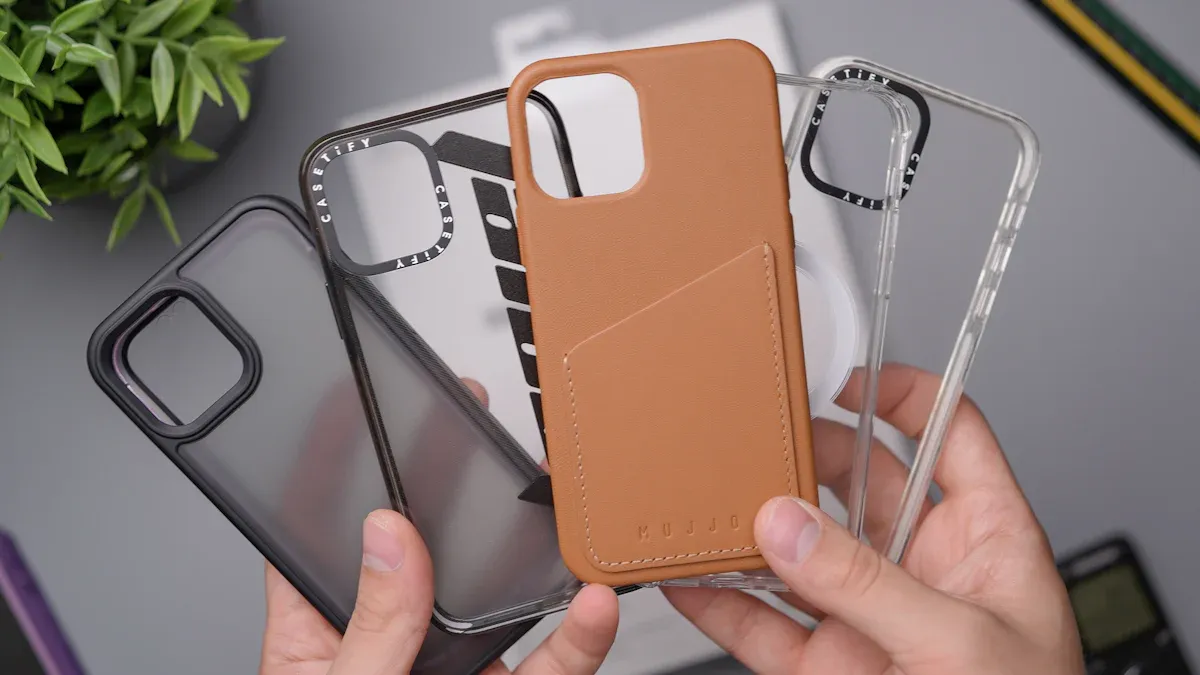
Start with your own shelf plan. Decide which mobile accessories you want to sell before you shortlist any supplier. Lifasourcing groups the common lines into clear families: phone cases, tablet cases, screen protectors, camera lens protectors, privacy films, and MagSafe-style cases; USB-C cables, wall chargers, car chargers, wireless chargers, and charging kits; power banks, charging docks, stands, and selfie lights. Oskotech adds USB-C to USB-C cables, USB-A to USB-C cables, and USB hubs to that list. Write your target categories down. Then match each candidate against your list.
Catalog breadth matters, and so does depth behind each line. X·ONE offers more than 15 product categories across its power, protect, portage, and play series, as one example of the range to look for. Look for real engineering behind the catalog. X·ONE's DNA Guard 6m Drop Protection and EnduraClear™ Anti-Yellow Tech show the kind of innovation depth that supports premium positioning in the consumer electronics industry. Ask about customization too: branded packaging, insert cards, barcode labels, and retail display requirements. A supplier with a strong global presence should handle these requests as routine work.
Fit depends on the device models your customers actually own. Confirm that each case, charger, and cable matches the models you stock. Check wireless charging support and port standards for your region. A supplier with international experience will know which SKUs suit which international markets.
Market alignment goes further. Review the supplier's market presence in your territory and its distribution record there. Ask how it plans manufacturing runs around your seasonal peaks. A partner with global reach can shift stock across global markets when demand moves. Test one or two SKUs in your target global market first. That small trial reveals more about fit than any catalog page.
Certification rules are different in each market you ship to. A certificate that clears customs in one country may mean nothing in another. Before you sign anything, confirm which certificates each target country requires. Earldom tells importers to check their market's rules and confirm the documents before paying a deposit. That step protects your money.
A well-prepared partner can show a full certificate file when you ask. X·ONE holds Apple MFi approval, Qi wireless certification, and testing by SGS and TÜV, as one example of the paperwork a mature supplier keeps ready. Ask every candidate for the same file. Match each certificate to the country where you plan to sell. This habit keeps your international trade on solid ground.
Customs paperwork must be exact. Clearit lists the core documents for a US shipment of mobile accessories:
A commercial invoice with detailed product descriptions, model numbers, country of origin, unit and total value, currency, and Incoterms — never vague terms like "electronics."
A packing list that matches quantities and model breakdowns exactly.
A bill of lading or airway bill that matches the importer and consignee data.
FCC or battery compliance documents where they apply, plus HTSUS classification and customs bond details.
Ocean freight adds the Importer Security Filing, which Clearit says must arrive at least 24 hours before vessel loading; penalties can reach $5,000 per violation. Clearit also notes that 19 CFR Part 163 requires importers to keep customs records for at least five years.
Plan shipping early. Earldom warns that power banks count as dangerous goods by air, so tell your forwarder exactly what the order contains. A shipping agent can make the process simpler, and a supplier with a strong global presence should support your paperwork. Strong quality systems and clean documentation go together.
The unit price doesn't show the full cost. Finale Inventory suggests you build a landed cost number. Add every cost that brings stock to your warehouse: purchase price, international shipping, customs duties, insurance, domestic freight, handling fees, and other import charges. Finale Inventory reports that buyers who use FOB pricing alone often underestimate real costs by 15–35%. A $10 item with $2 shipping can cost less than a $9 item with $4 shipping when you compare totals.
Lendis adds a total cost of ownership view. Acquisition costs include accessories, licenses, and setup services, and these extras can reach 20–30% of the total. Lendis gives a worked example: a €1,200 laptop plus €400 in accessories and licenses totals €1,600, which is 30 percent above the device price. Use the same logic for mobile accessories. Packaging, retail displays, and partner support belong in your model. A supplier with a global presence should quote these items openly.
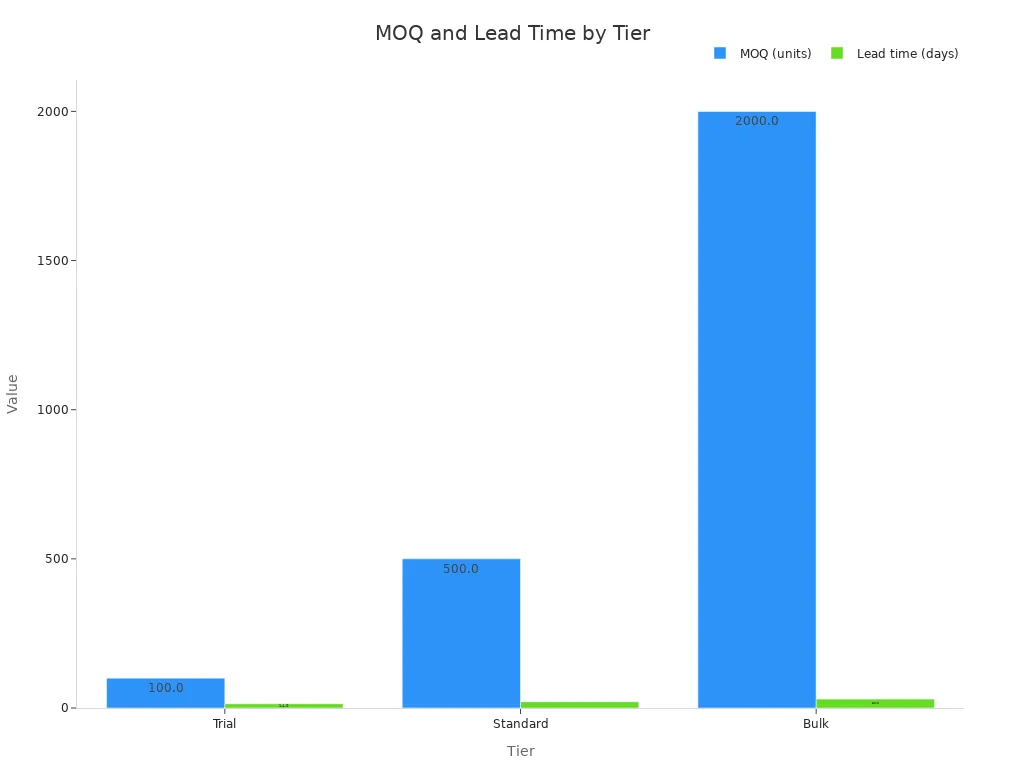
Commercial terms decide your cash flow. Getonecart lists typical Alibaba MOQs for electronics and accessories at 500–1,000 units, and you can negotiate down to 100–200. Getonecart also shows a Shenzhen phone-accessory supplier with three tiers: 100 units at US$5.40 with 14 days lead time, 500 units at US$3.80 with 21 days, and 2,000 units at US$3.10 with 30 days.
You can trade payment certainty for volume flexibility. Getonecart shares a template worth copying: "in exchange for accepting a 150-unit order against your standard 500-unit MOQ, I'm offering 100% payment upfront via T/T instead of the usual 30/70 split." Confirm the payment schedule, MOQ, and lead time in writing. X·ONE offers premium packaging and partnership support as one example of value-added terms to compare across candidates.
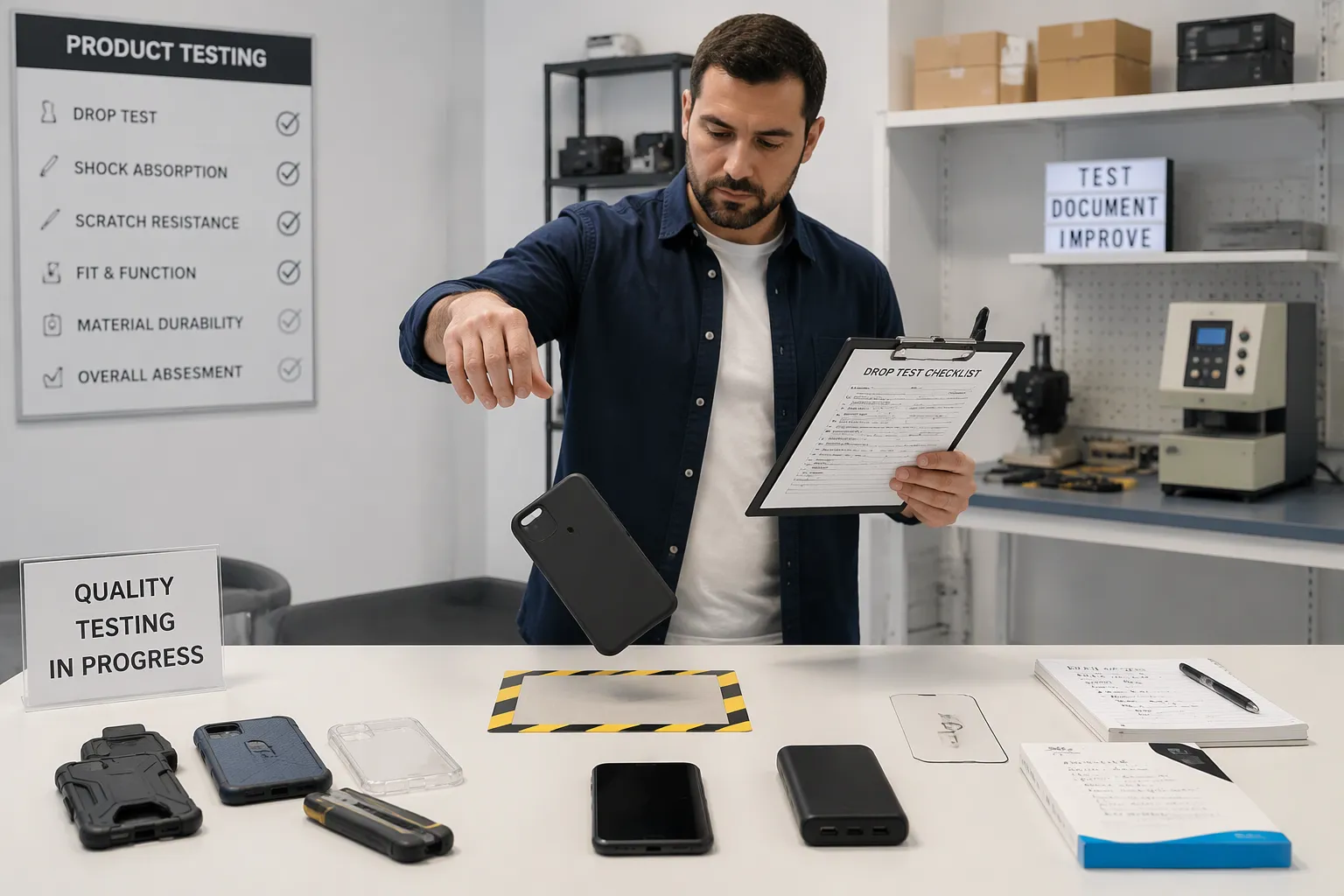
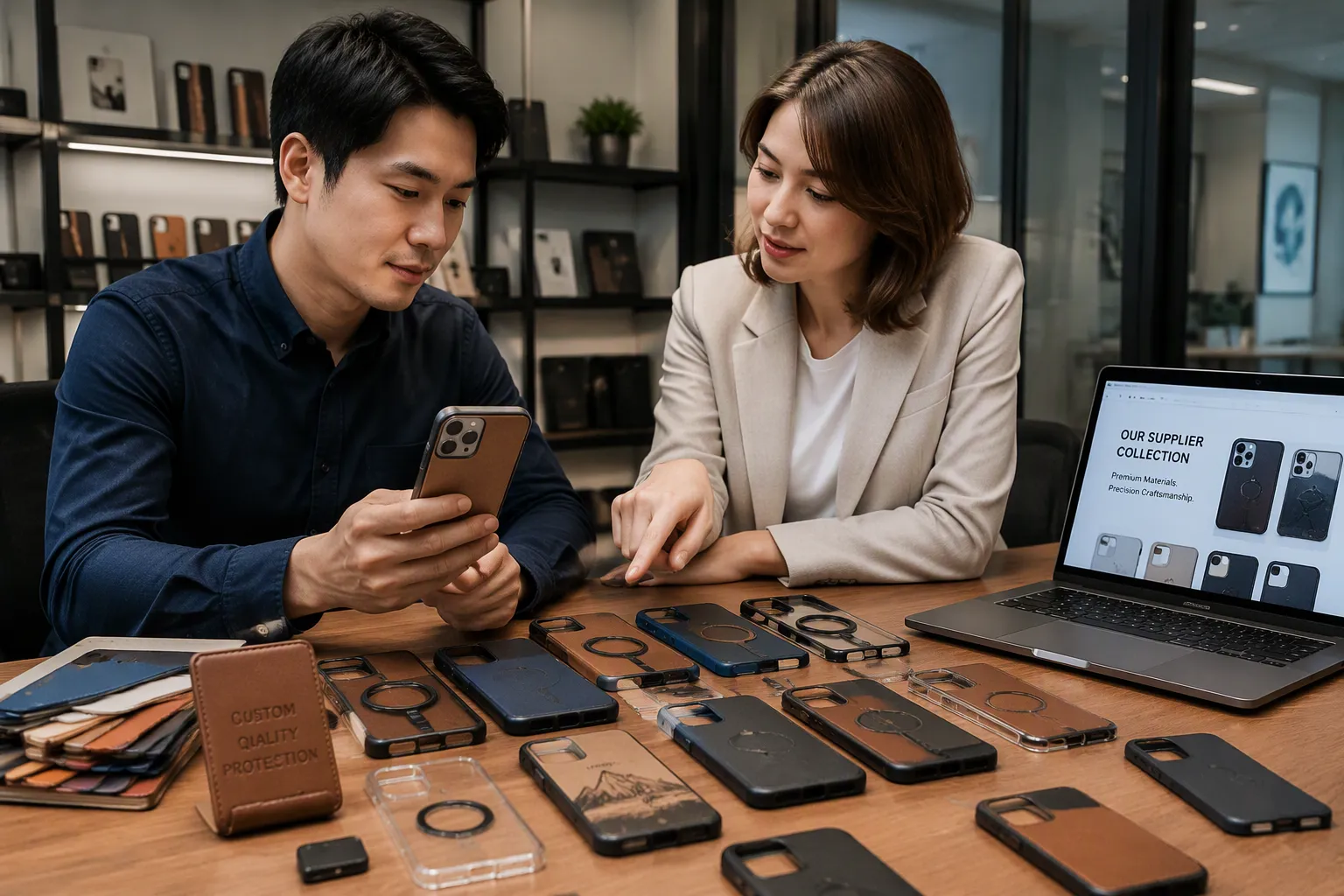
You have scored every candidate on four pillars. Now you need proof from your own hands. Order samples of the exact SKUs you plan to sell. Test them the way your customers will use them. Drop a case, charge a power bank, and install a screen protector. Record what fails and what holds up. Shortlist the mobile accessory companies that pass this test.
Run the pilot like a small commercial order. Conquest Phones advises buyers to ask which offered setup will match the final commercial order, which device settings are supported, and how to report a repeatable issue. Ask for a technical contact who can tell a product limit apart from an application question. Ask about a repeat order before you celebrate a successful sample. Will the supplier offer the same setup? How does it share changes? Can you get the relevant paperwork again?
Check the sample under real conditions. Conquest Phones recommends checking how the product works during a normal interruption, whether a user can return to the last completed step, and how the mobile accessories act under the handling conditions your market requires. Note repeated taps, accidental selections, and the ability to fix an entry. Check how any approved accessory affects control access and handling. Confirm the equipment and charging limits before you run the field test. A supplier should explain its technical duties and name what you must assess on your own. Follow the approved return and charging procedure at the end of the test.
Handle faults in writing. Conquest Phones suggests you ask how a faulty evaluation unit will be handled and what diagnosis, transport, and replacement work belongs to each party. Keep the distributor's promise within confirmed scope. Do not accept universal paperwork or long-term service based on one sample alone.
Plan your timeline against the 25–30 day delivery benchmark from earlier. A pilot order of mobile accessories that ships in that window tells you the manufacturing and distribution rhythm will hold for larger runs. Send each support request with the setup reference, application version, task sequence, observed result, and the conditions needed to repeat the issue.
Responsiveness separates a real partner from a catalog. Send a technical question during the pilot and time the reply. Judge the answer for relevance, not paperwork volume. An international supplier with a global presence should route your question to someone who knows the product. Request the model-specific protection evidence for the proposed accessory arrangement. A statement about one handset does not automatically answer questions about a headset, dock, or connected peripheral.
Ask what partner support comes with the deal. X·ONE, as one example, lists product training, sales and marketing materials, exhibition and event support, technical support, and after-sales support for its partners. Compare each candidate on the same list. Strong support covers training on product features, promotional resources for your channels, and display kits for events. Ask how each supplier documents quality checks for electronic mobile accessories.
Weigh the international customer base too. A supplier serving an international clientele has answered your questions before. That experience shows in faster replies and cleaner paperwork. Test one more thing: ask for a named account manager. A dedicated contact signals a collaboration built to last, not a one-off sale. That final signal matters most when you compare mobile accessory companies for a long-term global contract.
Rate every candidate on four things: technical performance, product fit, regulatory compliance, and cost-effectiveness. This four-part method keeps your comparisons fair across regions. Before you commit, run the final checklist: test samples, place a pilot order, and time each reply. These steps protect your investment. Reliable mobile accessory companies earn trust through evidence, not promises. The mobile accessories market rewards partners who choose well. A supplier with a global presence brings international experience to your distribution plans. Strong global expansion depends on relationships built over years. Treat each partnership as a long-term commitment. Your careful work today shapes the global network you build tomorrow.
Compare at least three candidates using the same four pillars. One quote gives you nothing to compare it to. Three or more let you spot outliers in defect data, pricing, and lead time. Score each one in writing. The comparison stays fair when every supplier answers the same questions.
Treat a 0.3% defect rate as a benchmark, not a promise. Ask each candidate for its own batch data. A supplier that tracks process control can show real numbers. A supplier that offers only a brochure claim tells you something too. Check the figures during your factory audit.
The answer depends on the market you ship to. Apple MFi, Qi wireless, SGS, and TÜV testing show what a mature quality system looks like. Confirm which certificates each target country requires. Ask for the audit reports behind every mark. A supplier with a global presence should produce this file quickly.
Build a full landed cost model before you compare quotes. Add shipping, duties, insurance, packaging, and support to the unit price. Buyers who rely on FOB pricing alone often underestimate real costs by 15–35%. A supplier with a strong global outlook should quote these items openly.
Start small and grow with evidence. Typical MOQs for electronics and accessories run 500–1,000 units, and you can often negotiate down to 100–200. Plan the pilot against the 25–30 day delivery benchmark. A clean pilot order proves the manufacturing rhythm will hold for larger runs.
Join X.ONE to access our best-selling original product,and leverage our end to end technical and marketing support to unlock new growth opportunities for your business.
 Material Support
 Training Support
 Marketing Support
 Exhibition Support
 Technical Support
 After Sales Support