Sep 11,2026
How to Select a Supplier for International Mobile Accessory Distribution
Thousands of suppliers fill the mobile accessories market today. This huge number makes sourcing feel risky. Focused research separates real premium mobile accessories companies from average vendors.
You must define your niche first. Do you need pop sockets, car holders, or magnetic powerbanks? Premium buyers pay for certifications, warranty coverage, and brand fit. Your requirements should reflect these priorities from the start.
A clear seven-step process removes the guesswork. Define your requirements, research the market, evaluate credentials, assess samples, negotiate terms, conduct due diligence, and place a trial order. Each step builds confidence in your final choice.
Pick your product area and quality level first. This makes your search easier and helps you meet what the market wants.
Look for suppliers using B2B directories, trade shows, and local networks. These sources help you find companies that have been checked.
Look for certifications such as MFi, Qi, and RoHS. These show that a supplier cares about quality and safety.
Ask at least three suppliers for samples. Test them side by side to compare quality and performance.
Begin with a small test order. This checks quality, delivery times, and communication without much risk.
Begin with a single product type. Premium mobile accessories companies concentrate their skills. They do not cover every market the same way. Choose from protective cases, power banks, chargers, screen protectors, or headphones. Headphones and earphones make up 44.5% of market revenue. This group needs Bluetooth certification and audio engineering. A headphone expert checks frequency response and battery life. A case expert uses drop protection labs. Magnetic accessories show up more at trade shows every year. This shows demand is growing. Every niche needs its own certifications. Wireless chargers require Qi approval. Apple accessories require MFi approval. For power banks, ask for UL-listed battery cells. For screen protectors, state a 9H hardness rating. These details set premium suppliers apart from general vendors. Check e-commerce best-seller lists to confirm demand. Picking your niche makes your search smaller. You find partners with the right certifications and skills. Your products meet market expectations from day one.
Quality starts with certifications. MFi approval makes sure Apple devices work with the product. Qi certification guarantees safe wireless charging. SGS and TÜV marks prove material durability and safety. Put these requirements in your sourcing document. Warranty terms show reliability. A two-year warranty points to high product confidence. One-year warranty is normal for lower tiers. Brand fit matters too. Your supplier’s packaging, design language, and finish must match your brand image. Ask for photos or samples to judge how it looks.
Budget must include certification costs. Certified parts cost more. A UL-listed charger costs more in materials than a generic one. But premium pricing allows higher retail margins. Add certification fees to your starting budget. Plan for ongoing batch testing costs. A supplier with a two-year warranty may charge 15% more. This extra cost lowers return rates and protects your reputation. Set a minimum quality standard before you talk about price. Write down all requirements clearly. Use this document to check every supplier you review. This method protects your brand and builds long-term buyer trust.
Begin your search on B2B sites. Global Sources is Asia's most trusted sourcing marketplace for North American electronics buyers. It has run for over 50 years. It is still a top choice for sourcing from verified suppliers in China and Southeast Asia. This platform works well for buyers who source mobile accessories from Asian makers. It offers strict supplier checks, a mix of online and trade-show sourcing, and machine-learning tools to help you find products.
IndiaMART is India's biggest B2B marketplace. It links global buyers with more than 8 million verified suppliers. The platform offers behavior-based matchmaking, RFQ tools, and safe payment options.
IndiaMART holds 60% of India's online B2B classified market share.
Global Sources stands out for electronics sourcing. It hosts verified suppliers from Asia and gives buyers strong tools. These tools include product comparisons and on-site supplier audits. Key features cover verified manufacturers and trading companies, yearly trade shows in Hong Kong, and detailed supplier profiles with audit reports. This platform fits electronics manufacturers, hardware importers, and tech companies best.
Reddit and Quora help too. Search for wholesale supplier guides in related subreddits and question threads. Real buyers share their experiences with premium mobile accessories companies there. These talks show which suppliers deliver on time and which ones fail.
Trade shows bring suppliers right to you. You can touch products, test quality, and meet decision-makers in person. Global Sources Mobile Electronics is a key event. It focuses on innovative and branded designs in mobile devices, smart wearables, charging products, smart energy, and mobile accessories. The show runs twice a year at AsiaWorld-Expo in Hong Kong. The next edition starts on 10/18/2026 and lasts 4 days.
Trade Show | Focus | Frequency | Location | Venue | Date | Duration |
|---|---|---|---|---|---|---|
Global Sources Mobile Electronics | Innovative and branded designs in mobile devices, smart wearables, charging products, smart energy, and mobile accessories | Twice a year | Hong Kong | AsiaWorld-Expo | 10/18/2026 | 4 days |
Local dealers and manufacturers make your work easier. They speak your language and follow your region's rules. You can visit their facilities and check quality control yourself. Local partners also respond faster when problems come up. Build relationships at regional trade events and industry meetups. These connections often lead to reliable long-term suppliers.
Certifications show which manufacturers are serious and which are just casual traders. Before you talk about pricing, ask every supplier for their certification documents. Premium mobile accessories companies hold many approvals across different regions.
Certification | Region | Purpose |
|---|---|---|
CE | European Economic Area | Confirms safety, health, and environmental compliance |
FCC | United States | Prevents harmful radio frequency interference |
RoHS | European Union | Restricts hazardous materials like lead and mercury |
MFi | Apple ecosystem | Authorizes Lightning and MagSafe accessories |
Qi | Global wireless standard | Certifies safe wireless charging performance |
X·ONE shows what strong credentials look like. This company holds over 180 patents and awards. It has Apple MFi approval and Qi wireless certification. SGS and TÜV testing prove its products meet durability and safety standards. These marks tell you the supplier invests in compliance instead of cutting corners.
Qi certification matters even more for wireless products. A Qi2.2-certified factory lets distributors market products as premium and future-proof. Smart detection systems stop overheating, overcurrent, or foreign object interference. Qi2.2 works fully with older devices, so one accessory serves users across multiple device generations. For B2B brands comparing Qi2 and MagSafe, the open standard gives the same magnetic charging experience at 25-35% lower certification costs.
Numbers tell part of the story. Real buyer experiences tell the rest. X·ONE has sold over 100 million units and works in more than 60 countries. That scale suggests steady quality across diverse markets.
Look for documented case studies from suppliers you evaluate. One distributor in Jakarta managed 4,000+ retail touchpoints and sourced 1.2 million accessory units yearly. When 18% of bundled memory cards failed within three months, the supplier added batch testing and direct factory sourcing with serialized traceability. The result: failure rates dropped below 1%, and the distributor kept all major retail accounts.
Client ratings add another layer. An average rating of 4.7 out of 5 across multiple buyers signals reliable service. Read the details behind each rating. Buyers who mention specific improvements, like catching assembly restrictions before quoting, show a supplier pays attention to details.

Hold the product in your hands before you decide on a supplier. Premium mobile accessories companies send physical samples for a reason. First, touch the materials. Check the seams, weight, and finish. A magnetic powerbank should snap firmly to a phone. A case should feel rigid with no sharp edges. These details show the factory's real production quality.
Drop protection claims need proof. The MIL-STD-810G standard requires 26 drops from 122 cm onto a 2-inch plywood surface over concrete. The device must still work after all drops, but cosmetic damage is allowed. Ask your supplier for the test report. Remember, brands self-certify this standard. No outside group checks the result. Some makers test beyond the standard. Casetify's Ultra Impact cases claim 8-foot (3-meter) drop protection. This exceeds the MIL-STD-810G requirement of 4-foot drops. Impact ratings are also given in joules. More joules mean more protection. These ratings come from dropping cases from different heights onto different surfaces.
Order samples from at least three suppliers at the same time. This side-by-side method shows differences quickly. Standard lab drop tests are about 1.2 meters. Some manufacturers do extreme testing with drops from 23 meters or even from the stratosphere at 26,000 to 36,000 meters. You do not need those extremes for everyday use. Instead, focus on your target market's real conditions.
Make a simple scorecard for each sample. Test drop protection, material feel, and finish. Check certification papers against the real product. Compare packaging and how it fits your brand. Run a battery drain test on power banks. Test wireless charging speed on magnetic accessories. Write down every result in one place. This data takes emotion out of your choice. A supplier with strong numbers and clean samples earns your next talk. A supplier with gaps does not.
You need to know the smallest order you can place before you talk about price. Premium mobile accessories companies set different MOQs for stock and custom items. Stock products have lower minimums. Custom-branded products need bigger commitments.
Stock items (basic cables or cases): 10–50 pieces
Custom-branded items: 500–2,000 units
Always check the MOQ with your supplier. There may be hidden minimums for each SKU. Ask for a written list of every product line you plan to order.
Pricing models change by product type. Consumer electronics follow a pattern you can predict.
Product Category | Stock MOQ | Custom MOQ |
|---|---|---|
Consumer electronics (earbuds, chargers) | 50–200 pcs | 500–1,000 pcs |
These ranges match standard catalog products from Chinese factories. Custom products with your own molds or materials may need higher MOQs. Ask your supplier to explain the cost gap between stock and custom runs. A custom logo on a powerbank adds tooling fees. A new mold for a phone case costs more upfront. Add these costs into your unit price math.
Payment terms keep your cash flow safe. First orders usually need 30% down and 70% before shipment. Try to get a lower deposit. A 20% deposit leaves more cash in your business. Ask for a letter of credit on big orders. This method protects both sides.
Delivery terms need clear deadlines. Ask for a production plan with key dates. A sample approval date, a mass production start date, and a shipping date must be in the contract. Penalty clauses for late delivery give you power. A 1% discount per week of delay is a common ask. Confirm the shipping method and Incoterms. FOB and EXW terms move responsibility to you at different points. Pick the term that fits your logistics setup. Request a pre-shipment inspection before you pay the rest. This step catches quality problems before products leave the factory.
Don't just trust logos on a supplier's website. You need to check Apple MFi certification through official sources. Start by looking at the packaging. A real MFi-certified accessory has the official logo. Using this logo without permission is against the law. The cable also has a special Apple digital chip inside. You can confirm the certification by searching Apple's MFi Licensed Accessories database. Type in the brand or product name. If it doesn't show up, the certification is fake. For wireless chargers, MFi certification isn't needed. Apple uses the Qi wireless standard instead. Your main focus should be Qi compliance. A Qi-certified charger makes sure charging is safe and works well. Chargers without certification can damage your battery or cause safety problems.
Third-party factory audits give you an important layer of protection. Companies like TESTCOO offer professional inspection services. Their auditors check if the factory is real, how much it can produce, and its quality control systems. An auditor looks for valid CE, FCC, and RoHS certificates. Never accept a simple screenshot or edited PDF of a certificate. These documents are easy to fake. A physical audit or a live virtual factory tour is much more trustworthy. A clean audit report proves the supplier's claims are true and protects your investment from recalls or customs delays.
Don't just stop at paperwork. Contact references directly. Ask the supplier for a list of current distribution partners. Reach out to these companies. Ask specific questions. How does the supplier deal with product defects? What are their usual lead times? How quickly does their support team respond? A reliable supplier welcomes these conversations openly.
Look for signs of a real partnership. Premium mobile accessories companies stand out by offering complete partner support. You want a supplier that gives you more than just a product. You need help with material sourcing, sales training, marketing assets, exhibition samples, technical troubleshooting, and after-sales service. X·ONE builds its partnerships around these exact things. This full support system shows a supplier is invested in your long-term success. You are building a strategic relationship, not just approving a vendor for one order.
You have finished your research. Now you need real data from your own market. Begin with a small trial order instead of a full container. This way you can test quality, lead times, and communication without risking all your money. Order a few best-selling SKUs and a couple of new arrivals. Mix price points to see what your customers really buy.
Track every metric during the trial. Measure how fast products sell, defect rates, and how quickly the supplier answers your emails. The global mobile accessories market was worth about $105.45 billion in 2025. It will reach $189.92 billion by 2033, growing at 7.8% per year. Third-party accessories hold 65% of that market. These numbers show the opportunity is real. Your trial order tells you if a specific supplier can help you capture it.
A trial order is the first step, not the last one. Successful distributors in over 40 countries follow a clear path. They start in local markets, carry the brand steadily, expand their product categories, move from retail to wholesale, and in time become regional distributors. This progression builds a stronger advantage than always switching suppliers.
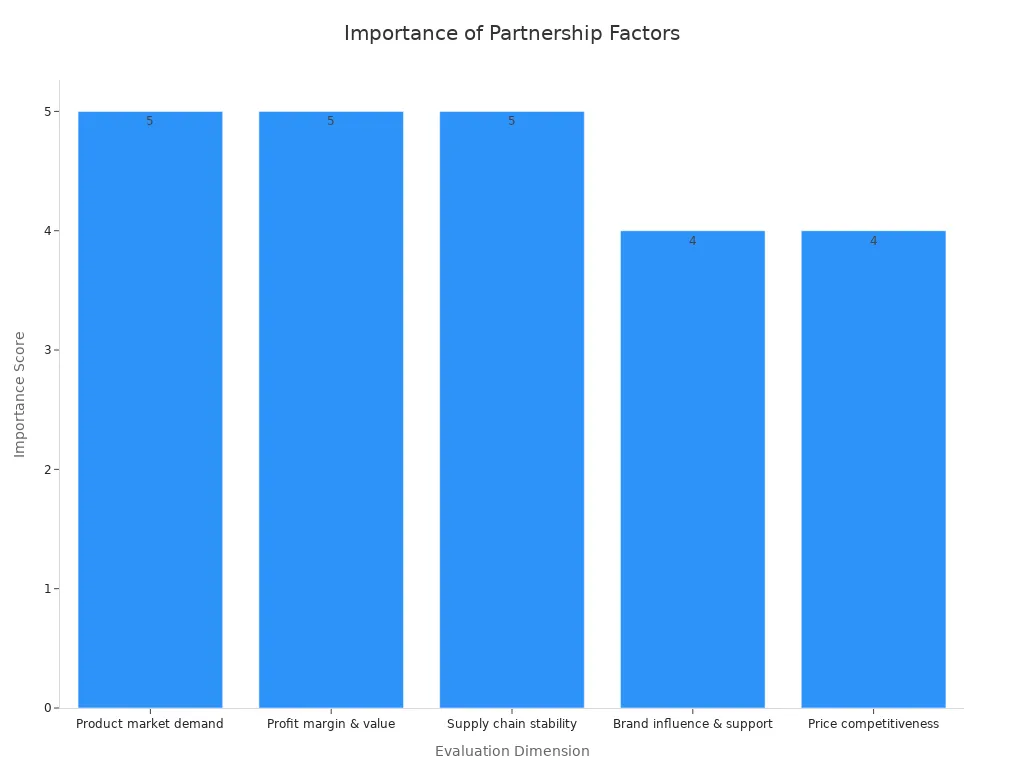
Look for a partner that offers more than products. X·ONE provides material, training, marketing, exhibition, technical, and after-sales support. That full support system shows a supplier invested in your growth. Evaluate potential partners on product demand, profit margin, and supply chain stability. These three dimensions matter most for long-term earnings. Brand support and price competitiveness also count, but they rank a little lower. Once you confirm product-market fit and supply stability, discuss regional distribution and exclusive rights. A strategic partnership beats a transactional relationship every time.
You now have a clear plan to follow. Define your niche, research suppliers, check credentials, assess samples, negotiate terms, do due diligence, and place a trial order. This seven-step process takes the guesswork out of your sourcing choices.
Premium mobile accessories companies show their value through certifications, patents, and proven track records. X·ONE holds over 180 patents, Apple MFi approval, and Qi certification. The company has sold over 100 million units across 60+ countries. These credentials point to a reliable partner.
Start by defining your niche today. Move step-by-step toward a trusted supplier. Build strategic partnerships that help your long-term growth. Proactive sourcing leads to better products and stronger margins.
Check certifications first. Premium mobile accessories companies hold Apple MFi approval, Qi wireless certification, and SGS or TÜV testing marks. X·ONE also holds over 180 patents. These credentials prove the supplier invests in compliance and quality instead of cutting corners.
Require CE, FCC, and RoHS marks for basic compliance. Add Apple MFi approval for Lightning and MagSafe products. Demand Qi certification for wireless chargers. Ask for SGS or TÜV test reports on durability and safety. These documents separate serious manufacturers from casual traders.
Order samples from at least three suppliers at the same time. This side-by-side method reveals differences in materials, finish, and certification accuracy. Score each sample on drop protection, battery performance, and packaging quality. Strong numbers and clean samples earn your next conversation.
Look for material sourcing help, sales training, marketing assets, exhibition samples, technical troubleshooting, and after-sales service. X·ONE builds partnerships around these exact offerings. This full support system shows a supplier invested in your long-term growth, not just one order.
Place a small trial order first. Test quality, lead times, and communication with a few best-selling SKUs. Track defect rates and sales speed. Once you confirm product-market fit and supply stability, discuss regional distribution and exclusive rights with your chosen partner.
Join X.ONE to access our best-selling original product,and leverage our end to end technical and marketing support to unlock new growth opportunities for your business.
 Material Support
 Training Support
 Marketing Support
 Exhibition Support
 Technical Support
 After Sales Support