 繁体中文
 Italian
 Spanish
 Thai
 Turkish
 Japanese
 Portuguese
 Russian
 French
 German
 Polish
 Arabic
Sep 24,2026
How to Find Reliable Mobile Accessories Suppliers for Global Distribution
You can find a reliable company for impact-protection screen protectors by following five clear steps. Each step gives you a real way to check a supplier before you spend money, and none of them needs special tools.
Look into the company's reputation through reviews, repair experts, and sourcing details.
Check technical performance claims against published test standards.
Make sure the protector fits your exact device model and coverage needs.
Check regulatory compliance and ask for testing documents.
Compare costs, warranties, and after-sales support before you decide.
Go through the list in order. The steps build on each other, and the final decision becomes much easier.
Check the company's reputation by reading fair reviews and asking repair shops which brands they see.
Check impact-protection claims by asking for named test methods and published results.
Check that the protector fits your exact device model. Also make sure it works with your case or caseless style.
Check the safety certifications and ask for test documents for the exact model you plan to buy.
Compare the overall value by looking at price, test results, warranty terms, and how fast support responds.
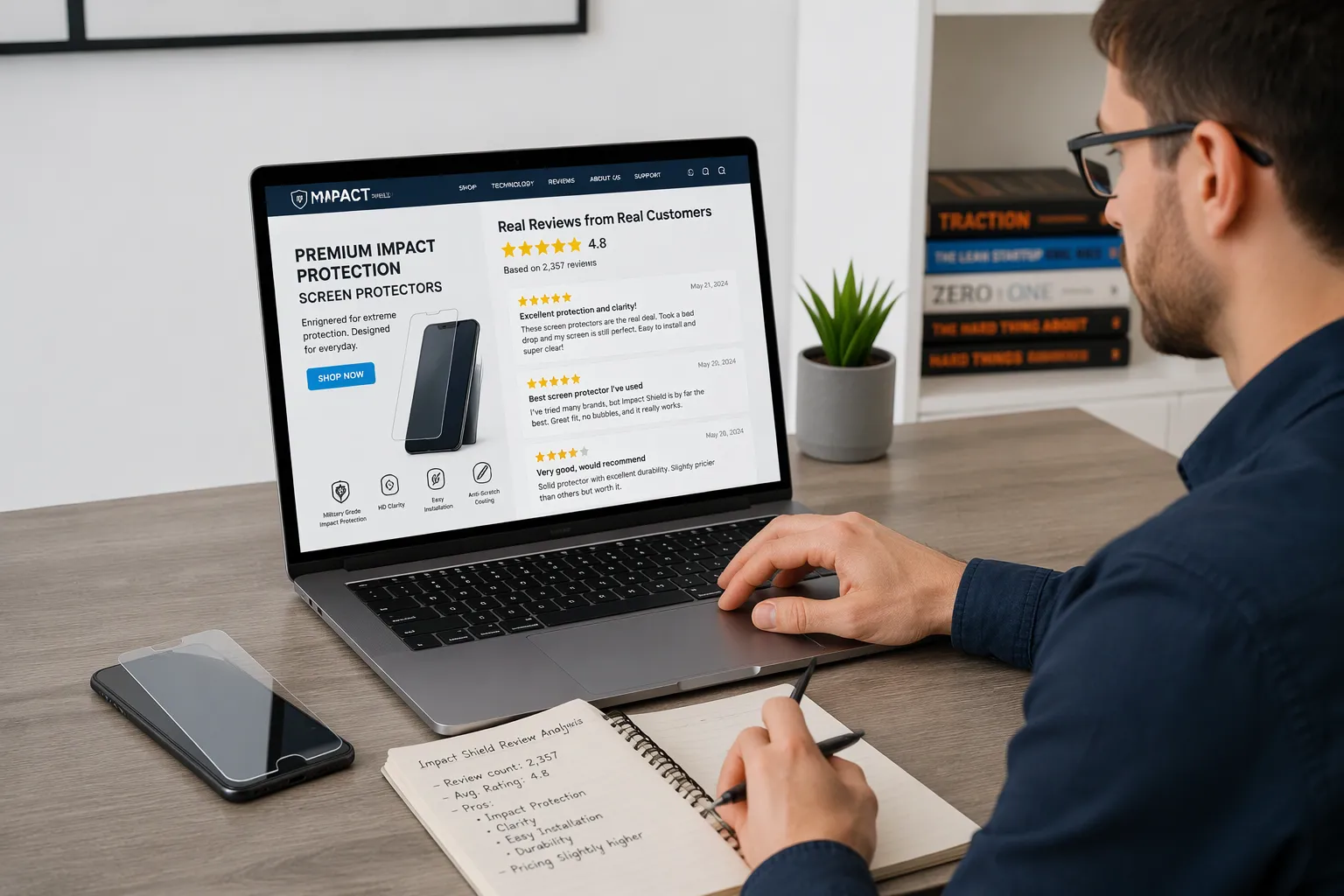
Begin by looking at the company itself, not just the product page. A trustworthy company leaves behind proof you can check. That proof includes customer feedback, sourcing details, and independent opinions. This section shows you how to read that proof with a careful eye. You will learn to tell real signals apart from marketing noise. A quick check now saves you from a costly mistake later.
Reviews help you judge a company, but only when they are real. Fake reviews often share a few warning signs. They show up in bursts on the same day. They use vague praise with no device model or usage detail. They praise the seller but never mention the screen protector itself. Read the middle-rated reviews first. A three-star review usually describes real strengths and real problems. Those balanced comments tell you more than a wall of five-star praise. Look at how the company responds to criticism. A public reply that solves the problem shows good faith.
Misleading ads deserve the same scrutiny. Watch for claims that sound impressive but carry no test standard behind them. A phrase like "military-grade protection" means little without a named test and a published result. Ask the company to explain any claim you cannot verify. A good seller will point you to a document. A weak seller will change the subject.
Cross-checks make your research stronger. Look at review sources beyond the brand's own website. Repair shops and device technicians see many screen protectors in daily work. Their public comments can confirm or contradict marketing claims. Treat every source as one data point, and look for patterns across several sources. One angry review proves little. A repeated complaint about the same issue deserves your attention. Ask a local repair shop what brands they see come back with problems.
Transparent sourcing works as a verification step. Reliable screen protector manufacturing companies will explain where their materials come from and how they make the product. Look for a company that names its material suppliers, describes its production process, and answers sourcing questions directly. This openness helps you identify screen protector manufacturing companies that value traceability over vague marketing. The point is traceability, not geography, and it applies to every material and every region equally.
Ask specific questions during this stage. Which factory assembles the product? What quality checks happen before packing? Can the company share a sample test report? Clear answers show proven specialization. Vague answers or redirects to a sales page tell you something useful too. Write down each answer and compare them side by side later. A company that cannot name its own production steps likely does not control them.
Selecting suitable manufacturers takes patience. Compare several candidates on the same criteria. Use the same questions for each one. This approach lets you compare them fairly and spot the ones that stand out. A company with a long track record, honest reviews, and open sourcing practices earns your attention. That combination marks a strong partner for your screen protector purchase. Keep a simple scorecard for each candidate. Score reputation, sourcing openness, and answer quality on the same scale.
Marketing words are easy to write but hard to prove. Your next step is to test each claim against a standard you can name. Ask the company for the test method behind every performance number. A real claim survives this question. A weak claim falls apart.
A drop test follows a fixed method. The tester drops a device from a set height onto a set surface. The tester repeats the drop many times and records when the screen breaks. Good companies name the standard they follow and publish the result. Ask which height the test used, which surface it hit, and how many drops the sample survived. A claim of 10-foot drops means little without those details. The same logic applies to any drop-protection figure you see.
One drop proves little. Repeated drops on the same unit show how the material holds up over time. Ask how many units the company tested. A larger sample gives you more confidence in the result.
Watch for vague phrases. "Military-grade" is not a standard unless the company names the specification. Ask for the report, not the slogan. A company that publishes its method lets you compare it with other brands on equal terms. That comparison is the whole point of this step.
The 9H label confuses many buyers. It comes from the pencil hardness scale, and it measures scratch resistance only. A 9H surface is scratch-resistant by design. A 9H rating tells you the surface resists scratches. It says nothing about drop protection. Keep those two ideas separate when you read a spec sheet.
Material choice matters more than any single rating. Each type fits a different user.
Material | Strengths | Limits | Best fit |
|---|---|---|---|
PET film | Low cost, thin profile | Least impact protection | Budget buyers who want basic coverage |
Tempered glass | Good clarity, firm feel | Some users find it fragile | Users who want a glass feel and easy cleaning |
Hybrid polymer | Absorbs shock, resists cracking | Higher cost | Users who prioritize durability |
A tempered glass protector offers excellent clarity. Some users report cracks after a hard hit, so treat it as a clarity-first choice. A tempered glass screen protector also feels familiar under your finger. PET suits a tight budget and light use. Hybrid polymer options address durability concerns and suit heavy daily use. Thickness also shapes performance. A thicker layer can absorb more energy, yet it may change the touch feel. Ask the company how it balances these trade-offs.
X·ONE shows how a brand can publish its impact protection technology. Its lineup includes hybrid polymer impact protection, DNA Guard 6m drop protection, multi-layer absorption, and honeycomb structural design. These named technologies give you something concrete to check. Other brands publish different but valid methods, and you should judge each on its own documents.
A screen protector ballistic glass product and a hybrid polymer product can both serve you well. Match the material to your habits. Then confirm the claim with a test report. That habit turns a scratch- and impact-protection promise into a fact you can trust. The same discipline applies to scratch- and drop-protection claims across the screen protectors you review. Check the screen underneath after any test, and confirm the screen protection holds up over time. Every screen protector claim deserves this check.
Fit starts with the exact model. Screen protectors cut for one device rarely sit well on another. Check the listing for the full model name and number, not just the brand line. A protector made for last year's model may cover the camera or miss the curved edge. Confirm the model in the product title, the compatibility list, and the spec sheet. All three should agree.
Next, decide on coverage. An edge-to-edge screen protector reaches the full glass surface and looks seamless. A case-friendly design leaves a small margin around the border. That margin lets a phone case wrap the sides without lifting the film. Think about your daily setup. If you use a bulky case, choose case-friendly. If you go caseless, edge-to-edge suits you. Modern phones often have curved edges, so ask how the protector handles the curve. A flat sheet may leave a halo at the rim.
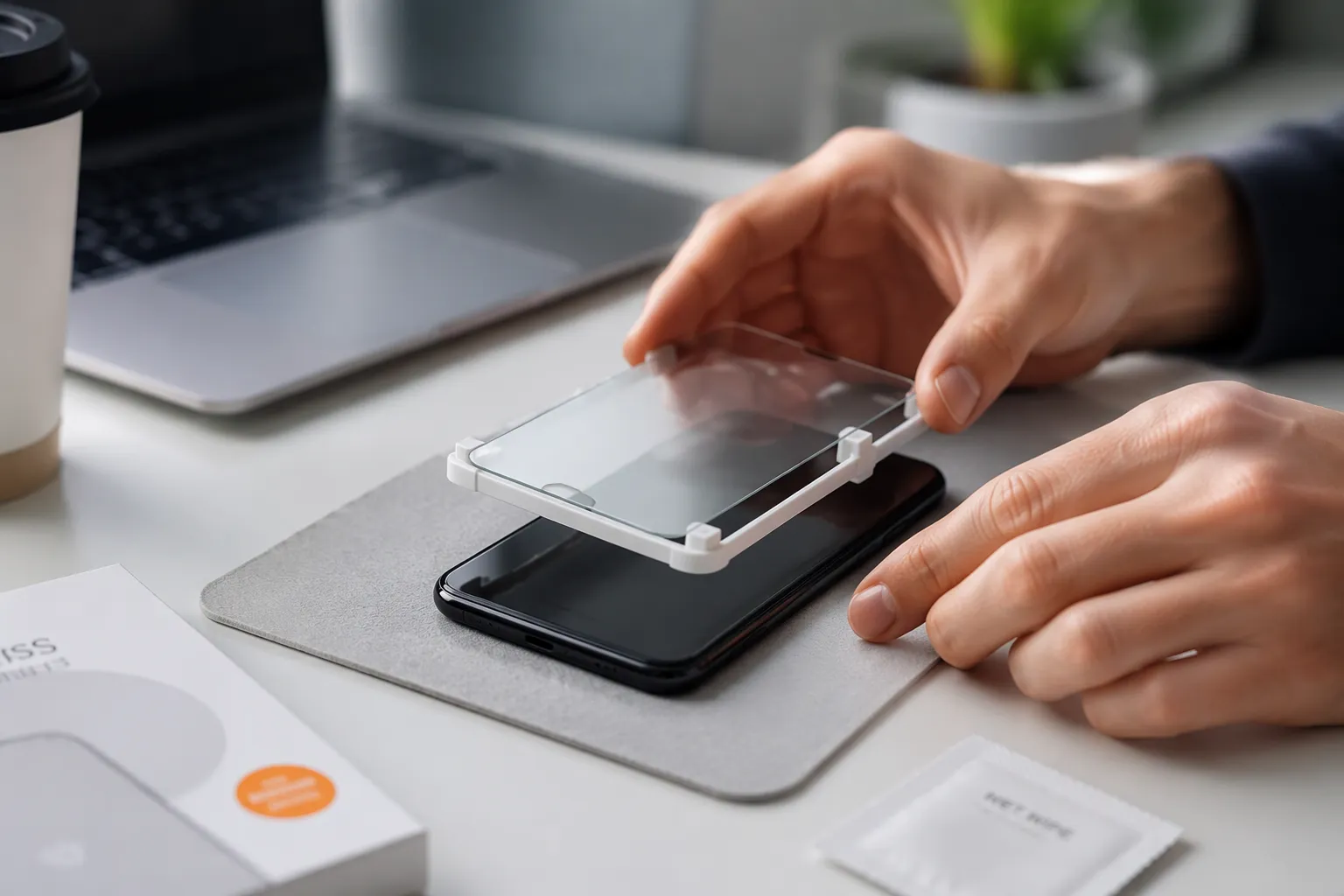
Installation shapes the final result as much as the product does. Dust trapped under the film creates bubbles that never settle. Ask whether the company includes an alignment frame, a dust-removal sticker, or a guide tray. These tools make a straight, bubble-free placement much easier. Read the instructions before you buy. Clear steps in plain language signal a company that supports its buyers.
Professional installation can be a real factor. Some reliable companies offer in-store fitting or recommend trained technicians. Ask about this service when you compare sellers. A guided fitting removes much of the risk, especially with a tempered glass screen protector. You also gain a witness if a defect appears. Screen covers installed by a trained hand tend to last longer. Treat installation support as part of the product, and weigh it in your choice.
Certifications give you an outside check on what a company says. Ask about the marks that matter for a screen protector. SGS and TÜV do independent testing on durability and safety. Apple MFi approval covers accessories made for Apple devices. Qi wireless certification confirms a product works safely with wireless charging. Each mark answers a different question, so match the mark to the claim you want to check.
A logo by itself proves little. Ask for the certificate number and what it covers. A valid mark names the exact product line and the standard it met. Check that the model you plan to buy is on that list. A company that sells screen protectors under one certificate for a different product has not shown you much. Treat the mark as a starting point, then confirm the details.
You can ask any company for testing documents directly. Send a short message and name the report you want. Ask for the drop-test method, the sample size, and the pass result. Ask which lab ran the test and when. A reliable company answers these questions without hesitation. Some post reports on their product pages, which saves you a step.
X·ONE shows what verifiable documentation looks like. Its products carry Apple MFi approval, Qi wireless certification, and testing by SGS and TÜV. That mix covers device compatibility, charging safety, and durability. You can point to each mark and trace it to a named lab. Other companies publish different but equally valid marks, so judge each on its own documents. Compare the reports side by side, and note which manufacturers give you full access. Rigorous testing leaves a paper trail, and that trail is your best evidence. A screen protector backed by clear documents earns trust faster than one backed by slogans.
A higher price does not always mean better impact protection. Some costly screen protectors carry a big name and not much else. Others cost less and share solid test results. Your job is to match the cost to proven performance and a correct fit. Start with the test reports you gathered earlier. Then ask what the extra money buys. A higher price may cover better materials, tighter quality control, or a stronger warranty. It may also cover packaging and ads. You cannot tell the difference from the price alone.
Build a simple comparison for each candidate. List the price, the published drop-test result, the material type, and the fit for your device. A mid-priced tempered glass screen protector with a clear test report often beats a costly option with vague claims. A hybrid polymer model may cost more than a basic film, yet it earns that gap through durability. Judge each screen protector on this evidence, not on the label. The best value sits where proven performance meets your budget.
Warranty terms carry real money value. Replacement warranties cover a cracked or lifting protector for a set period. Read the terms closely. Check what the policy covers, how long it lasts, and who pays shipping. A long warranty from a company with slow support helps you little. A shorter policy with fast, simple claims often serves you better.
After-sales support belongs in the same calculation. Ask how you reach the company when a problem appears. Test the response time before you buy with a simple question. A quick, clear reply predicts good support later. Good screen protection also protects your device's resale value, since a clean, uncracked screen keeps trade-in offers higher. Add these factors to your cost sheet. A slightly higher price with strong replacement warranties and responsive support usually delivers the better long-term deal.
By now, you have collected a lot of evidence. A short checklist can turn that evidence into a clear answer. Run every candidate through the same five points before you decide.
Reputation: real reviews, balanced ratings, and public replies to complaints.
Verified impact-protection claims: a named test method, a stated drop height, and a published result.
Fit: the exact device model, the coverage style you need, and clear installation support.
Certifications: valid marks tied to the specific model you plan to buy.
Cost: price weighed against test results, warranty terms, and support speed.
Score each candidate on all five points. A company that scores well across the board is the safer choice. One strong score cannot hide weak results elsewhere. This checklist also protects you from a persuasive sales page. A reliable company welcomes these questions and answers them with documents.
Read the return and replacement policy before you pay. Check the return window, the condition required for a refund, and who covers shipping. Confirm how a replacement claim works for a cracked or lifting screen protector. Ask whether the policy covers installation defects. A clear policy removes much of your risk.
Test the support channel with one question before you order. A fast, specific reply tells you the company will stand behind its screen protectors. Save the policy page and your order confirmation. Genuine protection shows up in documents and fit, not in slogans. Apply this checklist, and you will choose a supplier with confidence.
Five checks help you tell a reliable company apart from one that just sells well. Look into the reputation, check the technical claims, make sure the fit is right, review the compliance marks, and compare the cost. All together, these steps give you a clear view of any supplier.
Use the checklist before you buy. Reach out to each company directly with any question the checklist leaves open. A fast reply tells you a lot about how they treat buyers.
Real impact protection shows up in documents and fit. Marketing words cannot take the place of a test report or a correct device match. Pick the screen protector that proves its impact-protection claims, and you protect your device with confidence.
Check three things in one sitting. Read balanced reviews, ask for a named test method, and confirm the exact device fit. A company that answers all three with documents earns your trust faster than one with polished ads.
No. The 9H label comes from the pencil hardness scale, and it measures scratch resistance only. Treat it as a surface claim. Ask for a separate drop-test report when impact protection matters to you.
No. Price often covers packaging and ads as much as materials. Compare published test results, material type, and fit instead. A mid-priced protector with clear documents can beat a costly one with vague claims.
Ask for the drop-test method, sample size, and pass result. Request certificate numbers for any safety mark the company displays. X·ONE, for example, publishes Apple MFi approval, Qi wireless certification, and SGS and TÜV testing.
Send one specific question and time the reply. Ask about warranty claims or installation help. A fast, clear answer predicts good after-sales service. A slow or vague reply warns you about future problems.
Join X.ONE to access our best-selling original product,and leverage our end to end technical and marketing support to unlock new growth opportunities for your business.
 Material Support
 Training Support
 Marketing Support
 Exhibition Support
 Technical Support
 After Sales Support