 繁体中文
 Italian
 Spanish
 Thai
 Turkish
 Japanese
 Portuguese
 Russian
 French
 German
 Polish
 Arabic

Sep 03,2026
Top 5 Durable Phone Protection Accessories for Active People

Finding good mobile accessories suppliers starts with a clear plan. You decide what you need, look through trusted sources, check certifications, talk about terms, and handle shipping. If you skip these steps, cheap vendors you have not checked can cause big problems. You may get high defect rates, customs delays, and lost customers. The mobile accessories market rewards preparation, not guessing. This six-step framework covers everything from picking products to long-term partnerships. The sourcing process for mobile phone accessories becomes easier when you follow a proven path. You will learn how to judge distribution partners, test samples, and get good terms. This guide gives you practical checklists to build a dependable supply chain.
Decide what kinds of products you want and how much you can spend before you reach out to suppliers.
Find verified suppliers on trusted B2B platforms and at trade shows.
Check certifications and test samples to make sure the products are good quality.
Talk about fair deals and know who handles shipping.
Make strong connections and get backup suppliers ready for safety.
First, you pick the product categories you want to sell. The mobile phone accessories market has four main groups: power, protection, portage, and play. Power means chargers and cables. Protection covers cases and screen guards. Portage is bags and holsters. Play includes gaming grips and stands.
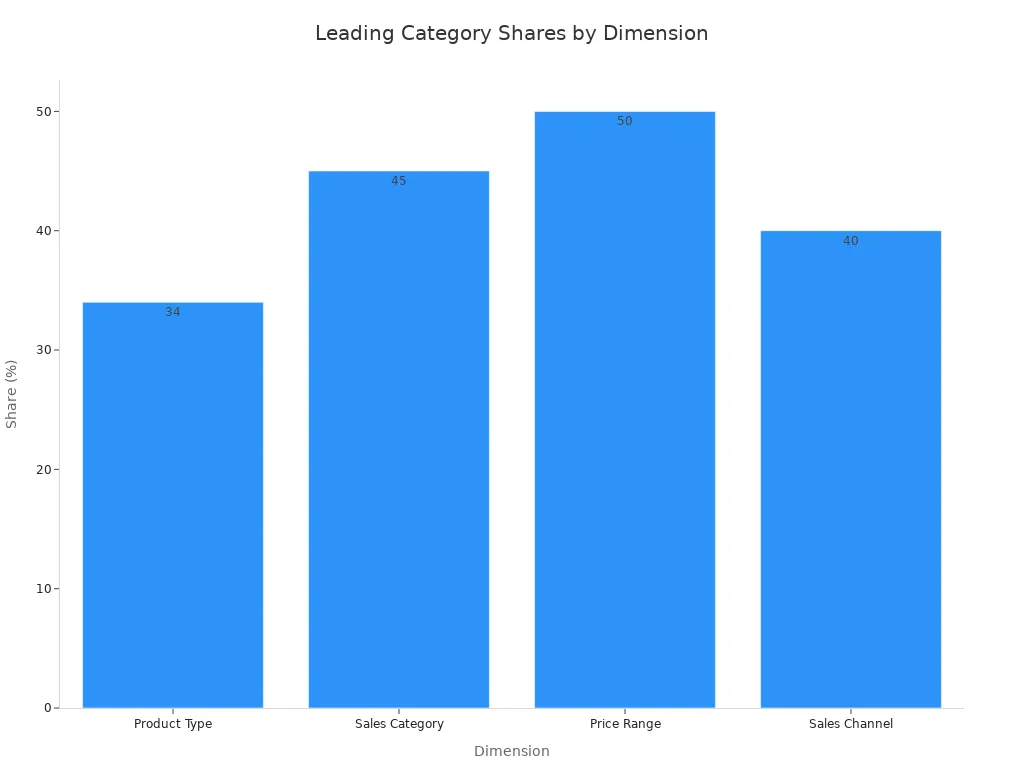
Market data shows protective cases and covers hold 34.0% of product type demand. Chargers are close behind at 34% share. Screen guards matter too. They keep fragile, high-resolution screens safe from scratches, cracks, and impact damage. Consumers see screen protection as a must-have. Smartphones cost a lot and play a big role in daily life.
Your category choices should match demand trends. Mid-range accessories take 47.0% of price range demand. Individual consumers drive 74.0% of end user demand. They buy for their own phones. This shapes design and channel trends. A wide range of mobile accessories helps you serve different buyer needs.
You need a realistic budget before you contact wholesale companies. Figure out your total spend on product cost, shipping, customs duties, and marketing. Leave room for returns and defects. A tight budget leads to poor choices later.
Your first order volume depends on storage space and sales speed. New buyers often start small to test the market. This approach limits risk. You can scale up after you confirm product performance.
Clear specifications cut down supplier miscommunication. Write down exact materials, dimensions, colors, and packaging needs. Plastic-based products make up 52.0% of material demand. Recycled plastic is a growing selling point. State your material preferences upfront.
E-commerce drives 45.0% of sales channel demand. Online retail is changing how people buy. If you plan to sell through this channel, your order volume should match projected online sales. Sourcing from suppliers who know distribution channels gives you an edge. They can advise on wholesale prices and minimum order quantities that fit your budget.
The search for partners starts on sites made for global trade. You need directories that check their listings. Random search results waste your time and put you at risk of fraud. Focus on well-known marketplaces that have a track record of linking buyers to verified manufacturers.
Global Sources is Asia's most verified sourcing marketplace for North American electronics buyers. It has run for over 50 years and offers one of the strictest verification processes in the industry. The platform does in-person audits and requires third-party certifications. A machine-learning discovery layer personalizes product recommendations for your needs. You can filter mobile accessories suppliers by verification level, certification type, and minimum order quantities.
IndiaMART holds 60% of India's online B2B classified market share. It links 300,000+ verified Indian suppliers with buyers in 190 countries through its export-focused subdomain. The behavior-based matchmaking system suggests relevant wholesale companies as you browse. You can send RFQs and compare quotes from many vendors at the same time.
The table below compares key platforms for sourcing:
Platform | Year Founded | Main Features | Best For | MOQ | Trustpilot Score |
|---|---|---|---|---|---|
1688.com | 1999 | Large domestic Chinese supplier base, factory-level pricing, Chinese-language interface | Buyers with local agents or Chinese language skills | Medium | 4.0 |
Alibaba.com | 1999 | Global B2B marketplace, Trade Assurance, broad product categories | International importers seeking bulk orders and long-term suppliers | Medium | 3.9 |
Aliexpress | 2010 | B2C-oriented, mainly supports small wholesale | Small businesses testing products with low MOQ or dropshipping sellers | Low | 2.2 |
Made-in-China.com | 1998 | Established B2B platform, strong in industrial and machinery products | Buyers seeking certified factories or OEM/ODM manufacturing | Medium | 3.6 |
TVCMALL | 2008 | Specialized mobile accessories supplier, one-stop sourcing, customization support | Independent store owners, chain retailers, and online platform sellers | Low | 4.5 |
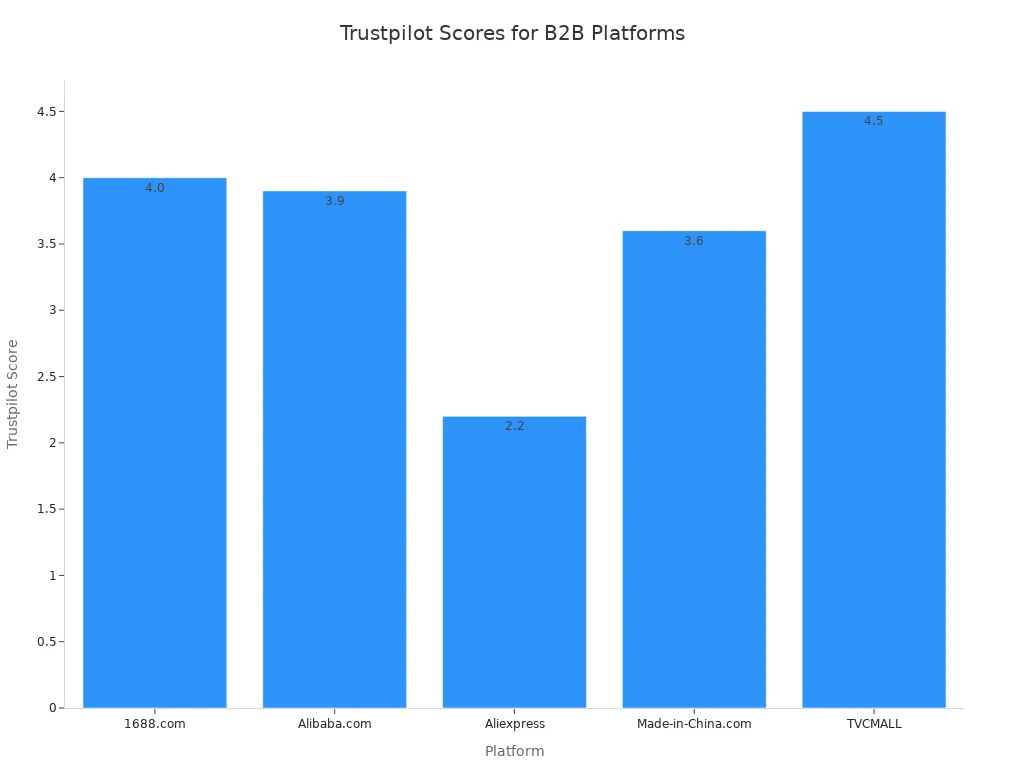
Trustpilot scores show which platforms give steady service. TVCMALL leads with 4.5 stars, which shows its focus on the mobile accessories wholesale market. Global Sources keeps strong ratings through verified listings and trade show support.
Each platform plays a different role. Mobile phone accessories wholesalers on Alibaba offer Trade Assurance for payment protection. Factory-direct partners on Made-in-China.com provide certified manufacturing capabilities. The wholesale mobile phone accessories market on 1688.com needs a local agent for overseas buyers.
For wholesale sourcing, pick platforms that offer sample ordering and product inspection services. Global Sources provides both. You can order samples before you commit to bulk purchase orders. Third-party inspection services check product quality against your written specifications.
To find a reliable supplier, use platform filters in a smart way. Look for "Verified Supplier" badges with onsite check status. Check certificate numbers against official databases like UL Product iQ or the EU CE Marking Database. A supplier with valid certifications charges higher wholesale prices but delivers consistent quality. Direct factory engagement usually requires MOQs of 1,000–5,000 units. B2B marketplace procurement supports sample-first workflows and multi-vendor comparison.
Trade shows give you face-to-face access to manufacturers. You inspect products in person. You discuss terms directly. Global Sources runs twice-annual Hong Kong trade shows that bring verified mobile phone accessories exhibitors from across Asia. These events work alongside their online platform. You meet factory representatives in person. You verify production capabilities onsite. You build relationships that email communication cannot replace.
Industry referrals carry a lot of weight. A recommendation from a trusted peer cuts your research time. Ask fellow distributors about their factory-direct sourcing experience. Ask about defect rates and delivery consistency. Referrals often lead to factory-direct wholesale catalog access that public platforms do not offer to casual visitors.
Both channels help you judge distribution readiness for your target markets. A supplier comfortable with trade shows and referrals shows transparency. They welcome outside scrutiny of their facilities. They expect long-term partnership commitments. These signals matter more than low prices or flashy website designs. A reliable partner invests in face-to-face relationships and open communication channels.
To find the right supplier for your global business, you need to do more than a quick search. You must check every claim a possible partner makes. The vetting process tells apart real manufacturers from middlemen who cannot deliver steady quality. Focus on two main areas: certifications and product samples.
Start with third-party certifications. Do not trust only platform badges. Ask the supplier for recent audit reports. ISO 9001 certification means they have a quality management system. Ask for the current report and a live video tour of the factory. Still images do not show real ability.
For Apple products, you need Apple MFi approval. Real MFi partners have a valid MFi License Number. Check this number at mfi.apple.com. Any mobile accessories supplier that says MFi but has no verifiable license number is likely making fake claims.
For wireless chargers, check Qi certification. Get the WPC membership certificate. Look it up on the WPC member directory. Ask for the Qi2 Product Registration Document with the assigned Qi-ID. Demand the ATL test report from an approved lab like UL or TÜV. This report covers MPP alignment, FOD, efficiency, and thermal tests. Get the Declaration of Conformity. Check the Qi-ID on the WPC product database. If the product is not listed, the certification is not real.
For safety testing, ask for full reports from well-known labs like SGS or TÜV Rheinland. A supplier that will not share reports is a warning sign. For CE marking, demand a Declaration of Conformity, not just a logo on the box.
Beyond certifications, look at the company's history. A reliable supplier should have a long track record and a substantial presence in the market, serving many customers across multiple countries. This demonstrates their ability to manufacture at scale and maintain quality consistency.
Certifications tell you what a supplier can do. Samples tell you about real product quality. Order samples before you buy in bulk. Test each unit against your written specs. For screen protectors, check scratch resistance and adhesive quality. For cases, check drop protection and button response. For chargers, test output speed and heat levels. Check material feel, fit, finish, and performance. A sample that passes these tests gives you confidence in the full production run.
Read customer reviews from other buyers. Platform review systems help you spot trends. Look for complaints about late deliveries, high defect rates, or poor communication. A few bad reviews are normal. A pattern of similar complaints is a warning sign.
Buying directly from a factory gives better quality control than using a trading company. You work with the manufacturer directly. This lets you access the factory's quality systems at every step. A factory-direct manufacturer with well-controlled quality systems can maintain a low defect rate and a standard production cycle. These benchmarks reflect manufacturers that invest in quality control instead of cutting corners to offer lower wholesale prices.
You want a supplier with full OEM/ODM ability and full-process QC. Full OEM/ODM ability means they can make custom products from your specs. Full-process QC means they check quality at every stage from raw materials to final packaging. These abilities lower your risk and ensure steady product quality.
Some wholesale companies focus on mobile accessories and build their reputation over many years. A trustworthy supplier shows you their factory, shares their certifications, and lets you test samples. Do not rush this step. A thorough vetting process protects your business from costly sourcing mistakes.
Think of minimum order quantities as a way to get better prices. A lower MOQ often means a higher unit price. This happens because the supplier spreads setup costs over fewer units. You can accept this trade-off if you need a small test order. Mix similar products from the same manufacturer into one order to reach the MOQ more easily. Tell the supplier your yearly business forecast and show them you can grow. Suppliers like buyers who show they will stick around for a long time.
Talk about payment terms at the same time as pricing. Offer to buy more overall or order more often in exchange for lower MOQs. You can also use longer lead times as another point to negotiate. Swap one-time discounts for loyalty-based pricing. This way you get better prices on repeat purchases, volume rebates over time, and early access to new products.
For your first order, focus on value instead of the lowest price. Compare wholesale prices from several suppliers to learn the market rates before you start negotiating. Ask for samples first. Build a relationship by promising regular orders that grow over time. This works well with wholesale companies that value long-term partnerships. Good wholesale sourcing needs a smart plan for negotiations. Factory-direct pricing saves you the middleman markup, but the best wholesale partner gives you steady quality at a fair price.
Incoterms spell out who pays for freight, insurance, and customs clearance for your mobile phone accessories. Pick the right term because it changes your total cost and risk. The table below shows three common options:
Incoterm | Who Arranges Freight | Who Insures | Where Risk Transfers |
|---|---|---|---|
FOB (Free on Board) | Buyer | Buyer | Once goods are loaded at the origin port |
CIF (Cost, Insurance, Freight) | Seller | Seller | Once goods are loaded at the origin port |
DDP (Delivered Duty Paid) | Seller | Seller | At the buyer's named destination |
With FOB, your cost starts after goods leave the factory. You arrange the main freight and insurance. This option gives you control over shipping costs but means more logistics work. CIF puts sea freight and basic insurance on the seller. You still handle destination customs and duties. DDP shifts almost everything to the seller, including import duties and final delivery. A higher DDP price may still be a good deal because it covers costs you would pay on your own. Compare quotes only on the same basis. A lower FOB price does not mean a lower total cost once you add freight, insurance, and destination duties.
Write down all agreed terms. A clear contract stops disputes over payment, delivery timelines, and product specifications. Confirm every detail before you place bulk orders. Written terms protect both you and your supplier. Smart sourcing with the right Incoterm makes your supply chain work better. Think about factory-direct sourcing for better control over quality and delivery schedules.

After you agree on terms, you need to take care of logistics and compliance for global distribution. Each market you ship to has its own rules for import clearance and product labels. If one document is missing, your shipment can be stuck for weeks. A strong logistics plan covers customs duties, packaging specs, and label requirements.
Every country uses its own classification codes for mobile accessories. It is important to correctly classify your products to apply the correct duty rates and clearance procedures. Import rules require separate compliance checks for each product category, such as safety certifications for chargers and batteries. Work with a customs broker who knows your product categories. A good broker stops clearance delays and lowers penalty risk.
Proper documentation is essential. Common documents include the commercial invoice, packing list, certificate of origin, test reports, and compliance certificates. Ensure all paperwork is accurate and complete.
Supplier packaging has to meet the rules of your target market. Some countries ban certain plastics. Others require specific recycling symbols. Put these details in your product specs before production begins.
Labeling rules are different in each region. Show the correct country of origin. Make sure markings match the language and rules of your destination market. A clear label lowers the chance of a customs hold.
Global compliance protects your brand reputation and prevents costly delays. A held shipment hurts your relationship with buyers down the line. Your distribution network depends on smooth customs clearance. The best suppliers follow global compliance standards. You can achieve global compliance by working with partners who know international rules. These partners help you ship faster. You face less rejection risk at the border.
Good partnerships need regular communication. Set up check-ins with your mobile accessories suppliers on a steady schedule. Monthly calls work well for important vendors. Quarterly reviews are fine for less urgent ones. Use video meetings to talk more deeply about performance and future plans.
Make a supplier scorecard to track results. Measure defects per million opportunities, first pass yield, and on-time delivery rates. Also track order accuracy and lead times. These numbers show where a wholesale partner does well and where they need to improve. Share the scorecard with your supplier. Open feedback builds trust and starts talks about solutions.
A good supplier provides training, marketing support, and after-sales service to its resellers. This approach helps distributors sell better. A reliable supplier invests in your success after the first sale. Look for factory-direct partners who offer similar support programs. These relationships create steady supply chains that help both sides.
Depending on one source creates risk. Weather events, labor strikes, or raw material shortages can stop production at any factory. One supplier failure can disrupt your whole distribution network. Smart buyers keep backup options ready.
Regionalized supply chains make it easier to find other sources for critical parts. Add a supplier in a different region to cut shipping distances and lead times. This plan also lowers risk from local disruptions. Build dual-sourcing into your backup plans. A clear playbook lets you act fast when problems come up.
Relying on a single supplier creates risk. Disruptions from weather, labor strikes, or material shortages can stop production. Diversify your supplier base. Test backup wholesale companies with small orders. Keep their contact information up to date. Review their abilities every year. This preparation protects your business when unexpected events happen.
You now have a clear plan to find dependable suppliers. Decide what you need, search through trusted places, check them with certifications and samples, talk about fair terms, handle shipping and rules, and build strong relationships. Keep in mind that trust comes from checking facts, not just cheap prices. Begin with a small test order from one or two wholesale companies. Grow your orders as you confirm good quality and delivery. This method keeps your distribution network and your brand safe. Make your supplier checklist today and start reaching out. Your success in global distribution depends on the partners you pick.
Check for ISO 9001, Apple MFi approval, Qi wireless certification, and SGS or TÜV test reports. You can confirm MFi numbers at mfi.apple.com. Look up Qi IDs on the WPC product database. These papers prove product quality and safety.
Order samples first. Test each unit against your written specifications. Check fit, finish, and performance. Compare results to your quality requirements. This step confirms product quality before you spend money on bulk quantities.
Factory-direct makers with controlled quality systems typically maintain a low defect rate. This benchmark comes from suppliers that invest in quality control at every production stage. Ask possible partners about their average defect rate.
FOB gives you control over freight costs but means more logistics work. DDP shifts nearly all responsibility to the supplier. CIF places sea freight on the seller. Compare quotes on the same Incoterm basis only.
Join X.ONE to access our best-selling original product,and leverage our end to end technical and marketing support to unlock new growth opportunities for your business.
 Material Support
 Training Support
 Marketing Support
 Exhibition Support
 Technical Support
 After Sales Support