 繁体中文
 Italian
 Spanish
 Thai
 Turkish
 Japanese
 Portuguese
 Russian
 French
 German
 Polish
 Arabic
Oct 15,2026
Which company provides complete solutions for mobile device protection
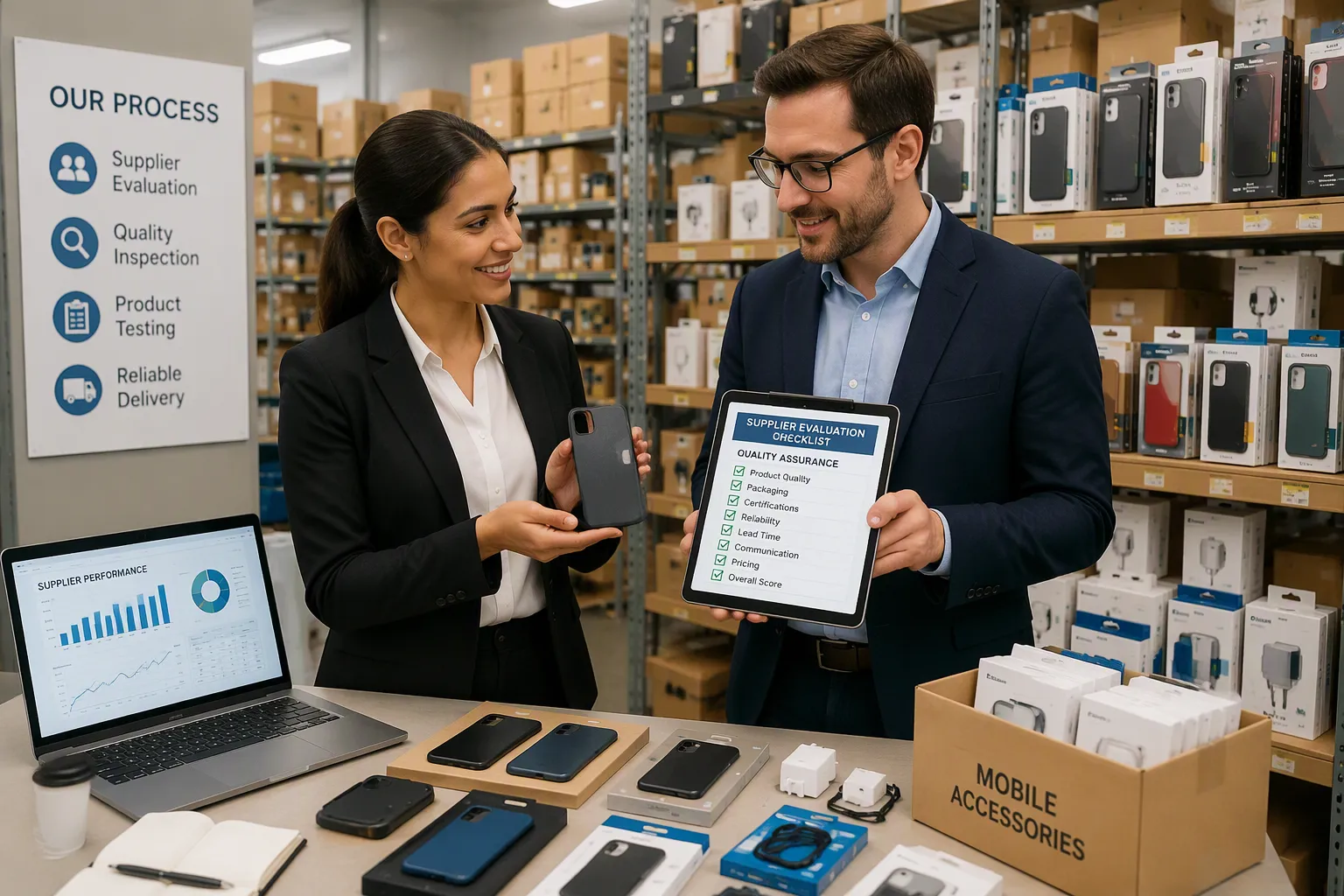
A bad partner on a big order can wipe out your profit, cause chargebacks, and delay a launch. The mobile phone accessories market hit USD 105.5 billion in 2025 and should reach USD 189.9 billion by 2033, so checking suppliers matters.
Seven signs show the difference between a strong partner and a risky one: proven high-volume production capacity, steady quality control, fair pricing with volume discounts, regulatory compliance, technical support and product know-how, dependable logistics, and financial stability with clear terms.
Use this list as a checklist before you recommend a supplier. Supplier reliability and bulk mobile procurement fit show up fast. Expect suppliers of mobile phone accessories to answer questions on mobile procurement, purchasing, procurement planning, and procurement review.
Check production capacity first. Ask for output numbers and references. Place a test order to confirm real capacity.
Ask for steady quality control. Ask for defect data and inspection reports. Compare samples from different batches.
Look at the total cost, not just the price of one unit. Ask for volume discounts in writing. Compare quotes using the same specs, delivery, and packaging.
Check the compliance documents. Confirm the certificates with the agencies that issued them. If paperwork is missing, treat it as a stop sign.
Check how they handle shipping and their money situation. Get their delivery times and payment terms in writing. Place a small test order to see how fast they deliver.
Capacity is the first thing to check when you vet a supplier. A supplier that cannot grow will miss reorder cycles and launch dates. That risk gets bigger when you buy mobile phone accessories in large amounts. A plant built for this work usually runs multiple active production lines with staffing per shift sized to match. That scale gives you economies of scale and keeps your operations flexible.
Ask for production line counts, monthly output numbers, and current order backlog. Request references from high-volume buyers. Then compare the answers against the documents below.
Verification area | Evidence to request |
|---|---|
Quality control | Inspection plans, defect data, corrective-action records |
Supply continuity | Lead times, MOQ policy, capacity plan, replenishment process |
Product development | Specifications, prototypes, test reports, approval records |
Compliance | Current reports, declarations, labels, traceability documents |
Channel support | Catalogs, image libraries, warranty policy, launch plan |
Where you source shapes the fit. Domestic distributors work well for fast replenishment. Regional partners balance speed and cost. Overseas factory-direct suppliers fit the largest programs. Match the model to your order size and delivery window.
Check capacity in person. Review monthly output, active production lines, staffing per shift, mold availability, inspection points, and packaging space. Ask for the last three months of delivery records, not a forecast. Confirm that a supplier's capacity claims match actual machinery, labor, raw-material storage, and realistic lead times.
Place test orders at partial scale. Measure defect rates, response time, and replacement handling. Use AQL inspections to add to in-process controls, never to replace them. Treat minimum order quantities as a sign of real capacity. High-volume suppliers publish clear MOQ tiers. Bulk phone supplier vetting rewards this discipline. Strong mobile procurement planning depends on verified output. Careful procurement review catches gaps early. Score each answer before you commit to a volume tier.
When you buy in large amounts, even a small defect rate can turn into a big bill for returns and chargebacks. One bad batch can cost you more than you make on the whole order. Steady quality protects your reorder rates and your good name with retail buyers. These are the clearest signs of a reliable mobile phone accessories distributor: the same output, batch after batch, with no surprises.
Ask for QC process documents, defect-rate data, and sample inspection reports. Request the approved product specification, acceptance criteria, and inspection and release records. A serious partner also shares quality management system certificates, compliance documents, and a document register that tracks revisions and status. Order samples from different production batches and compare them side by side. Run test orders at partial scale before you commit to a full run.
Private label and branding options give you another practical check. Private label work demands tight control, because product quality directly affects your brand. Confirm that samples match your specification, write those requirements into the contract, and arrange a pre-shipment inspection. Variety across product categories matters too. A supplier that handles cases, chargers, cables, and screen protectors well shows broad process control. Read customer feedback and reputation reviews to round out the picture.
Strong mobile procurement depends on this discipline. Build QC checks into every procurement review, and treat mobile procurement as an ongoing audit rather than a one-time task. Compare mobile phone accessories distributors on documented results, not promises. Reliable mobile accessories distributors welcome the scrutiny. That openness is exactly what you want from any mobile phone accessories distributor you shortlist.

Tiered pricing gives you a better deal when you buy more. A supplier sets price breaks at certain quantities, and each break lowers the unit cost. Ask for those breaks in writing before you negotiate. The lowest unit price rarely tells the whole story, though. Shipping, packaging, and defect risk all add to your total cost. A cheap unit with weak packaging can cost more after returns.
Minimum order quantities shape your pricing too. High minimum order quantities lower the unit price but tie up cash. Low minimum order quantities protect your cash flow but raise the unit price. Match the tier to your real demand. Buyers who order large volumes earn the best tiers, yet they also carry the most inventory risk. Weigh both sides before you sign.
Make every quote use the same specification, quantity, delivery term, and packaging before you rank them by cost. The table below shows why.
Comparison factor | Supplier A | Supplier B | Supplier C |
|---|---|---|---|
Unit price | Lowest | Higher | Headline price misleading |
Delivery term | EXW (buyer bears more cost/risk) | FOB (matches request) | Changed basis |
Packaging | Unconfirmed | Matches requested packaging | Changed |
Quantity | As requested | As requested | Changed |
Specification | As requested | As requested | Changed |
Comparable ranking | Not fully comparable | Fully comparable | Not comparable |
Supplier A looks cheapest, yet the EXW term shifts cost and risk to you. Supplier B ranks as the only fully comparable offer. Supplier C changed the basis, so you cannot rank it at all.
Ask for a full cost breakdown, not just a unit price. Tooling fees, packaging costs, and payment terms shift the real cost of a high-volume order. Compare lead time alongside price. Confirm what packaging includes, and factor in sample cost and timing. Flag vague or conditional quotes. Do not default to the lowest quote.
Low-cost suppliers fit price-sensitive, high-turnover lines. Premium-priced suppliers fit flagship products where proprietary technology and premium packaging justify the cost. Strong mobile procurement balances both across your mix. Build this comparison into every procurement review, and treat mobile procurement as a repeatable process. Compare suppliers of mobile phone accessories on normalized quotes, not headline pricing. Careful procurement planning protects your margin. A reliable supplier welcomes the scrutiny.
Compliance rules change with each product type and each market you sell in. Chargers, cables, and wireless pads have different requirements than cases or screen protectors. Start with the certifications that apply to your exact product lineup.
Certification / Lab | What It Validates |
|---|---|
Apple MFi | Apple's own approval that confirms the accessory works with iPhone products |
Qi | Meets the Wireless Power Consortium (WPC) rules for wireless charging |
SGS | Independent outside testing for product safety and how long it lasts |
TÜV | Independent outside testing for product safety and reliability |
MFi is Apple's own approval path for premium Apple accessories, while Qi2 is the open WPC standard checked by approved labs such as SGS and TÜV.
X·ONE shows how these credentials look in real life. The brand holds Apple MFi approval, Qi wireless certification, and testing by SGS and TÜV across its mobile phone accessories. MFi status also shows device compatibility you can trust, because Apple's proprietary authorization confirms compatibility with iPhone accessories.
Never take a logo as proof. Ask for copies of certificates and make sure they name the exact product models you plan to order. Then check with the issuing body yourself.
Get the UL File Number from the supplier — a UL logo by itself is not proof.
Look up that number in the UL Product iQ database.
Make sure the product description, manufacturer name, and ratings match the paperwork.
A CE mark is only legally valid when a signed Declaration of Conformity lists the standards that apply. Ask for the DoC and check the details; without it, the mark means nothing.
Build these checks into your mobile procurement routine. Strong suppliers welcome document review, and careful procurement protects your margin. Treat compliance as a regular item in every procurement review, and let mobile procurement planning start with verified paperwork.
A strong supplier gives you more than just boxes in your warehouse. The best partners share what they know about products, market trends, and sometimes marketing help. That knowledge helps you choose the right items for each market and avoid stock that sits too long. Ask a few technical questions before you order. A team that gives specific answers, not vague claims, shows real expertise. Also ask for trend or category advice. Good partners follow what sells and explain why.
X·ONE shows this kind of depth in real life. The brand uses advanced material science in its mobile phone accessories, like hybrid polymer impact protection, DNA Guard 6m Drop Protection, EnduraClear™ Anti-Yellow Tech, and AR Pro Coating Technology. More than 180 patents and over 15 product categories support that work. This level of engineering helps ensure device compatibility you can trust across many phone models. Strong suppliers of mobile phone accessories often build this kind of technical base.
Response time tells you a lot about a partner. Send a technical question and see how fast the answer comes back. A slow reply to a simple question points to slow support later, when a launch is on the line. Ask for test reports, material specs, and compatibility details. Then check if the answers match the documents.
Make this check part of your mobile procurement routine. Good mobile procurement depends on partners who answer fast and answer well. Score responsiveness in every procurement review. Careful procurement planning starts with the questions you ask early. A reliable supplier welcomes the scrutiny, and that openness protects your margin.

Lead time reliability decides whether you hit launch dates and keep reorder rates high. Ask every candidate for written lead times, not verbal promises. The sourcing model shapes what you should expect.
Sourcing model | Lead time expectation |
|---|---|
Domestic distributor (stock already in-country) | Shorter replenishment lead times; simpler returns if issues arise |
Overseas / factory-direct sourcing | Longer overall timelines, since production, export, and international shipping each add steps before goods arrive |
Treat claims like "ships in 24 hours" as prompts for follow-up questions. Ask exactly what fast shipping means in days and under what conditions. Define upfront how much lead time you can accept before you shortlist mobile phone accessories distributors. Then start with small test orders and measure real delivery times before you scale up.
Private-label or customization programs (custom packaging, exclusive colors, bundled kits) usually need higher volumes and longer lead times. So they make the most sense once demand is proven and repeat orders can be committed.
Global supply chain and sourcing companies can act as private label suppliers for international buyers. That model fits proven demand and committed repeat orders. Domestic distributors and wholesalers fit fast replenishment. Match the model to your window.
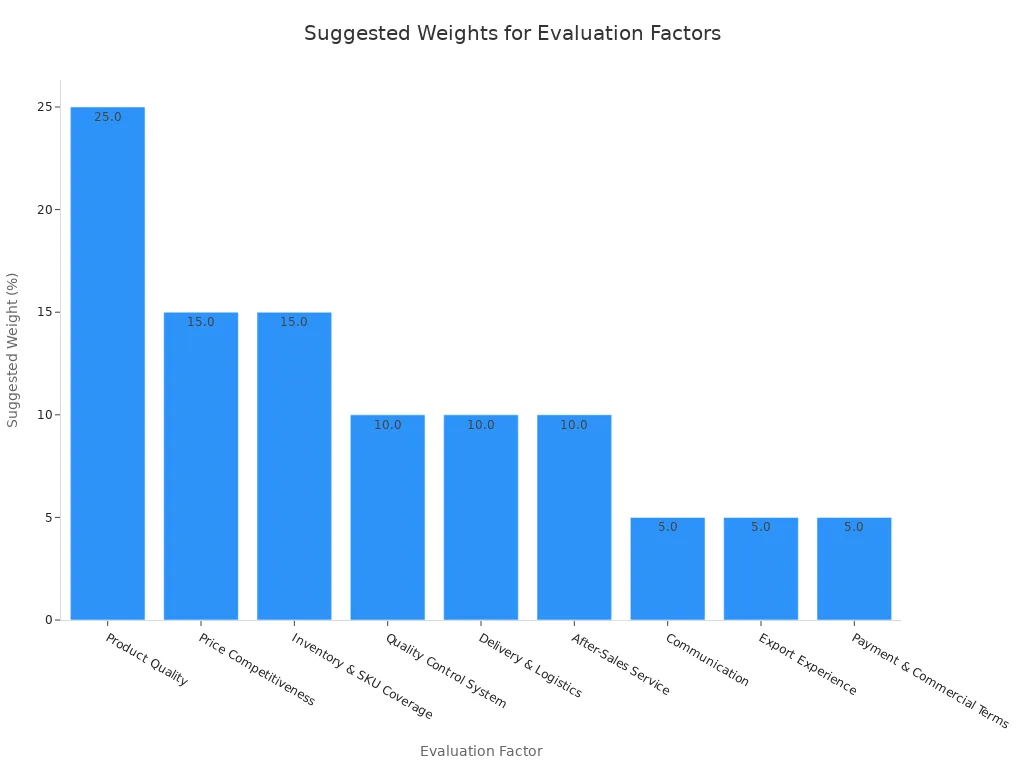
Score fulfillment with a weighted framework. Product quality carries the most weight at 25%, price competitiveness and inventory coverage each take 15%, and quality control, delivery, and after-sales each take 10%. Communication, export experience, and payment terms close the list at 5% each.
Evaluate inventory stability first. Ask for current stock, replenishment cycles, out-of-stock frequency, and whether inventory updates in real time. Examine the order flow from inquiry through after-sales, and confirm packaging suited to each category. Check export experience and communication quality. Clarify warranty and DOA policies in writing. Then run a trial order to measure accuracy, quality, and delivery.
Watch for warning signs: extremely low prices, unclear specifications, refusal to provide samples, and unstable inventory. For overseas programs, compare lead times across sourcing regions before you commit. Build these checks into mobile procurement, and let reliable logistics anchor every procurement review. Strong logistics reliability protects your margin, and that is one of the clearest signals of a reliable mobile phone accessories distributor. Compare mobile phone accessories distributors on measured performance, and treat mobile procurement as a repeatable process. Reliable mobile accessories distributors welcome the scrutiny. Every mobile phone accessories distributor you shortlist should pass this test. Careful procurement planning starts here, and good procurement rewards verified delivery records across all mobile phone accessories distributors.
A supplier with money problems can disappear in the middle of a contract. You then face stopped production, lost deposits, and a rush to find a replacement. That risk grows with every large order you place. Check financial health before you commit volume to any mobile phone accessories distributor.
Start with business references and years in operation. Ask how long the company has been in business and request names of buyers who order at your scale. Then review the numbers.
"Review the supplier's financial statements to assess their economic viability, ensuring they can sustain long-term partnerships." — Vendor Quality Audit Checklist, Point 4: Financial Stability
Request recent statements and confirm the figures match the scale of your order. A supplier that cannot pay for raw materials for your run will delay delivery. Apply the same test to small and large suppliers, and to domestic and overseas partners. Size alone does not prove stability.
Clear terms protect you when something goes wrong. Read the contract for how the supplier handles returns, penalties, and late delivery. Confirm defect, return, and warranty policies in writing before you sign. Vague language here turns into a costly dispute later.
Confirm payment terms in writing too. Note the deposit percentage, the balance schedule, and the currency. Ask what happens to minimum order quantities if demand shifts. A fair supplier adjusts terms to match real order flow.
Run this review across all mobile phone accessories distributors on your shortlist. Compare suppliers on identical terms, not verbal promises. Build the check into your mobile procurement process, and repeat it at each procurement review. Careful procurement planning protects your cash. Strong mobile procurement treats contract terms as a scored item. Every mobile phone accessories distributor you shortlist should pass this test. Reliable mobile phone accessories distributors welcome the scrutiny. That openness protects your margin on every mobile phone accessories order.
These seven signs make up one plan. Capacity, quality, pricing, compliance, expertise, logistics, and financial stability shape how you judge a supplier. Use the list as a scorecard when you check out suppliers. Ask for documents and place test orders.
Use the checklist on your next shortlist before a big order. Give each supplier a score. Then pick a supplier. Mobile procurement depends on proof. Careful procurement protects your margin. Fair procurement builds supplier trust. Good supplier checks let you choose a supplier. Every mobile phone accessories order needs that care. Partners in mobile phone accessories welcome supplier review. Check each supplier before you choose a supplier. Use mobile procurement to pick a supplier. Mobile procurement rewards proof.
Shortlist at least three suppliers. A shortlist of three lets you compare quotes on the same specs and spot outliers. Fewer options weaken your negotiating position. More options slow your review. Score each candidate against the seven signs, then narrow the list to two before you ask for samples.
Expect several weeks. Document review, sample orders, and reference checks each take time. Start with paperwork and written quotes, then move to samples from different batches. Run a partial-scale trial order last. Rushing this stage raises your chargeback risk later. Build the timeline into your launch plan from day one.
Treat missing documents as a stop sign. Ask for certificate copies that name your exact product models. Then check each one with the issuing body directly. A supplier who cannot produce paperwork before the order will rarely produce it after. Move to the next candidate on your shortlist.
Yes. A trial order at partial scale tests what documents cannot show: real defect rates, response speed, and replacement handling. Measure delivery against the written lead time. Compare samples from separate batches for consistency. Scale up only after the trial passes your checklist.
Build a weighted scorecard before you review anyone. Product quality deserves the heaviest weight, with price and inventory coverage close behind. Score delivery, after-sales, and communication on documented evidence, not impressions. Record every score with its supporting document. The highest total wins, and the record supports your internal recommendation.
Join X.ONE to access our best-selling original product,and leverage our end to end technical and marketing support to unlock new growth opportunities for your business.
 Material Support
 Training Support
 Marketing Support
 Exhibition Support
 Technical Support
 After Sales Support